This post may contain affiliate links. Please read our disclosure policy.
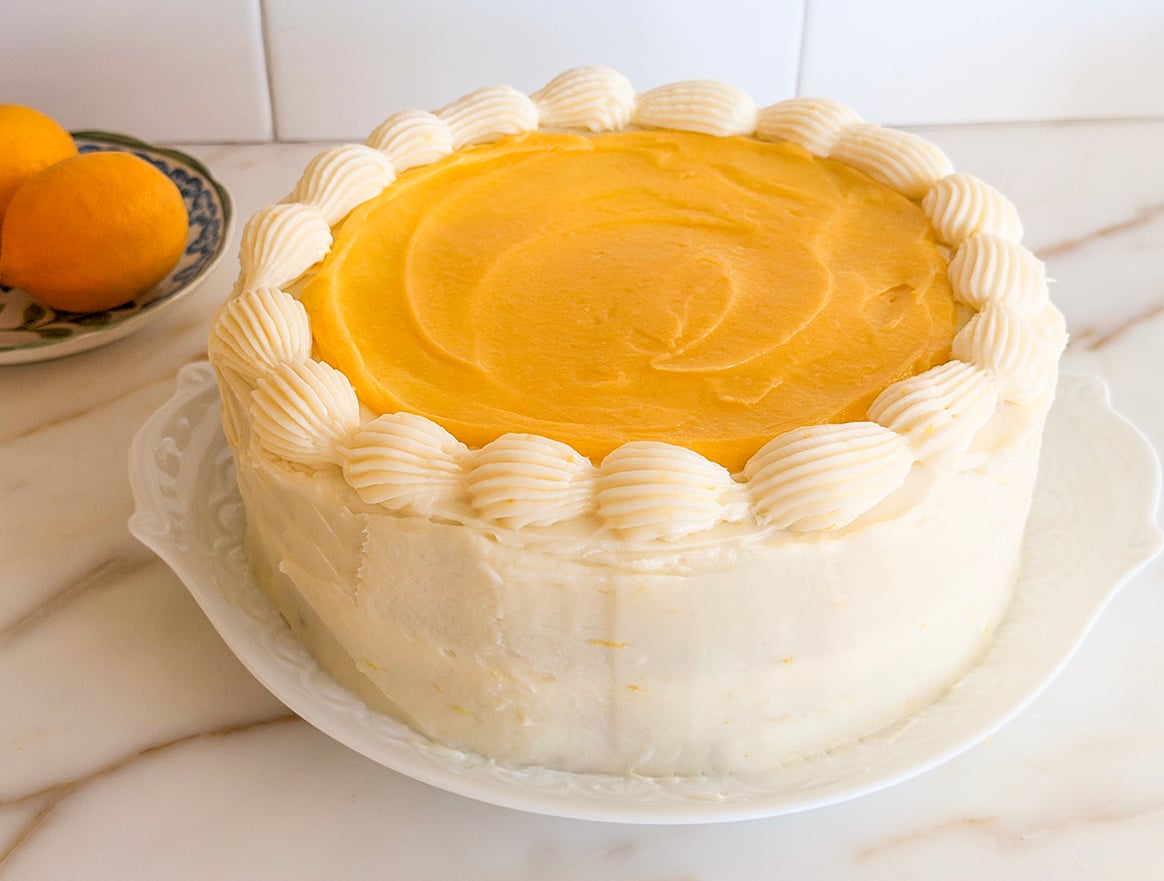
This layered lemon cake recipe features tender lemon cake, thick lemon curd, and a sweet, tangy lemon cream cheese frosting.

Lemon plays such a huge role in Mediterranean cooking, and Lebanese cuisine falls right in line with that. Lemon brightens everything it touches, and in baking, it is a family all-time favorite. I strive for lemon baked goods that are sweet-tart, not just sweet-lemon, for a real balance. Apply this less-sugary-more-tartness to any fruity recipe and watch the flavor come alive!!
I adore fresh lemons, and use them in recipes like my lentil soup and hummus. However, when it comes to sweets, this lemon cake with cream cheese frosting is my go-to when I want to do something really special (and impress!). My son Steven always, always asks for lemon cakes for his January birthday, and I’m always striving for a better one each year. He declares this one his all-time favorite!
Simple to prepare, the cake layers are infused with lemon juice, lemon zest, and lemon extract, creating a bright, bold taste, and they always turn out light and fluffy. Then, I add fluffy lemon buttercream and a creamy lemon curd to take it over the top. With two layers and a bright yellow color, this simple cake exudes freshness and easy-to-achieve beauty.
It makes plenty for a crowd, which is helpful around our house, not only for our big family, but so the gang can take pieces home too.
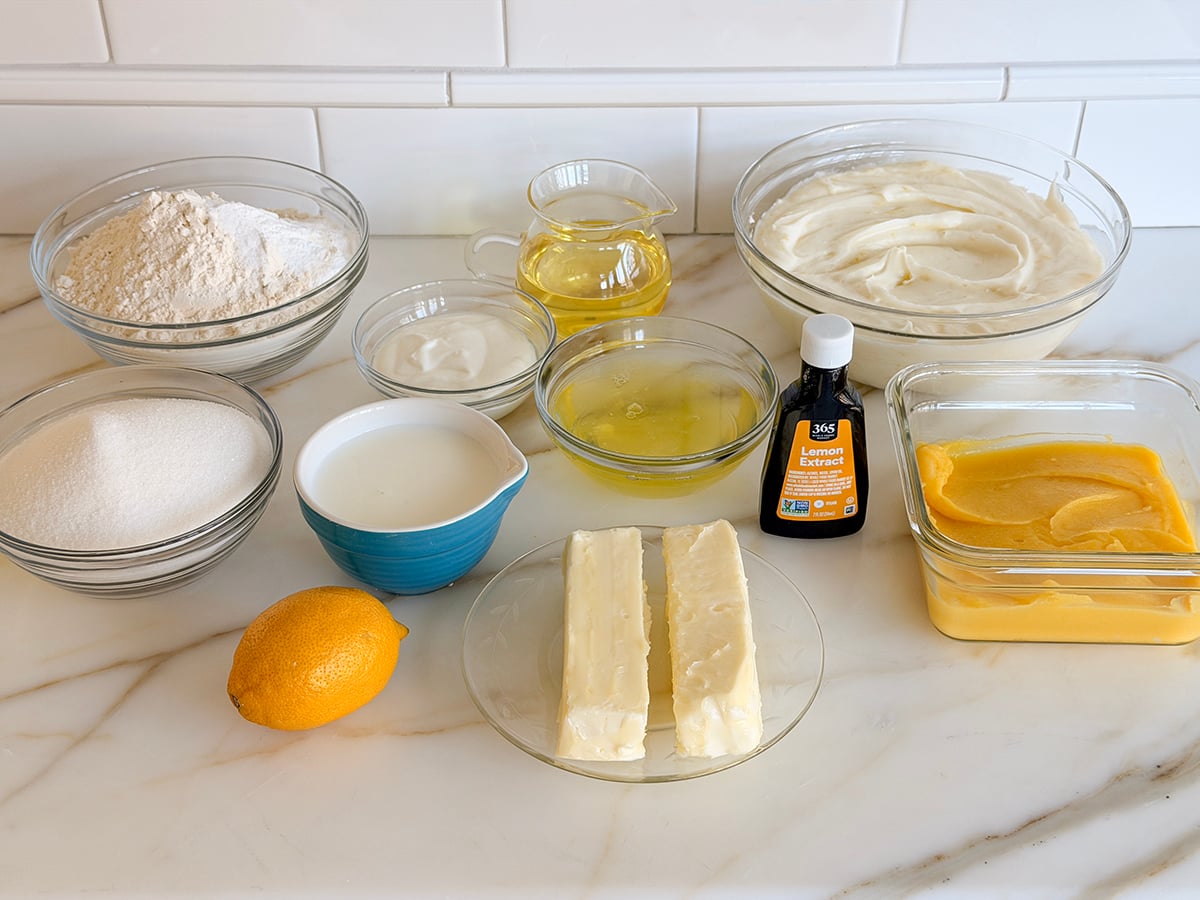
Ingredients and Notes
These are just a few notes about the key components. Please be sure to scroll down to the recipe card for the complete details!
- Flour – I use all-purpose flour for the base of the cake, but cake flour can also be used for an even softer crumb. I haven’t tested the recipe with a gluten-free alternative, but a 1:1 gluten-free substitute should work.
- Unsalted Butter – This helps aerate the batter when creamed with the sugar, creating a tender crumb and adding moisture and rich flavor.
- Lemon – I use fresh lemon juice, lemon zest, and lemon extract to infuse every bite with a bright citrus flavor. Be careful to avoid the white pith when zesting the lemon, as it can make your batter taste a little bitter.
- Oil – I use a neutral oil like vegetable oil or canola oil to add moisture, preventing the cake from being dry. You could also experiment with olive oil for a flavor profile similar to an olive oil cake.
- Yogurt – The natural acidity helps activate the baking soda, giving the lemon cake layers a lighter, fluffier texture. Yogurt also adds a subtle tangy taste that balances the sweetness of the sugar nicely.
- Lemon Cream Cheese Frosting – Skip store-bought options and use my Lemon Cream Cheese Frosting recipe to combine cream cheese, unsalted butter, confectioners’ sugar, lemon zest, and lemon juice to create a fluffy frosting.
- Lemon Curd – My homemade lemon curd comes together with six simple ingredients, adding a silky texture and even more lemon flavor to the cake. Substitute store-bought lemon curd if preferred. My favorite is from American Spoon.
Possible Variations
- Make a three-layer homemade lemon cake. Divide the batter between three 8-inch cake pans, and reduce the baking time slightly for a triple-layer cake.
- Add fresh berries. Scatter fresh raspberries or sliced strawberries over the lemon curd before adding the second cake layer. Then, finish with fresh berries on top after frosting for a pop of color and extra fruity flavor reminiscent of strawberry shortcake.
- Make a blueberry lemon cake. Fold about 1 cup of fresh blueberries into the batter to create a vibrant blueberry lemon cake.
- Omit the lemon curd. Layer the cake with just frosting if you prefer a slightly more subtle lemon flavor.
- Make cupcakes. Divide the cake batter evenly between a greased muffin tin, filling each cavity ⅔ of the way full. Then, bake at 350°F until a toothpick inserted into the center of the cupcakes comes out clean or with just a few moist crumbs. Once cool, core the center of each cupcake, fill them with lemon curd, and pipe frosting on top before serving.
- Add coconut. Fold ½ cup of shredded unsweetened coconut into the batter and sprinkle toasted coconut flakes over the frosted cake for extra texture and flavor.
How to Make Lemon Cake with Cream Cheese Frosting
Prepare the Lemon Cakes
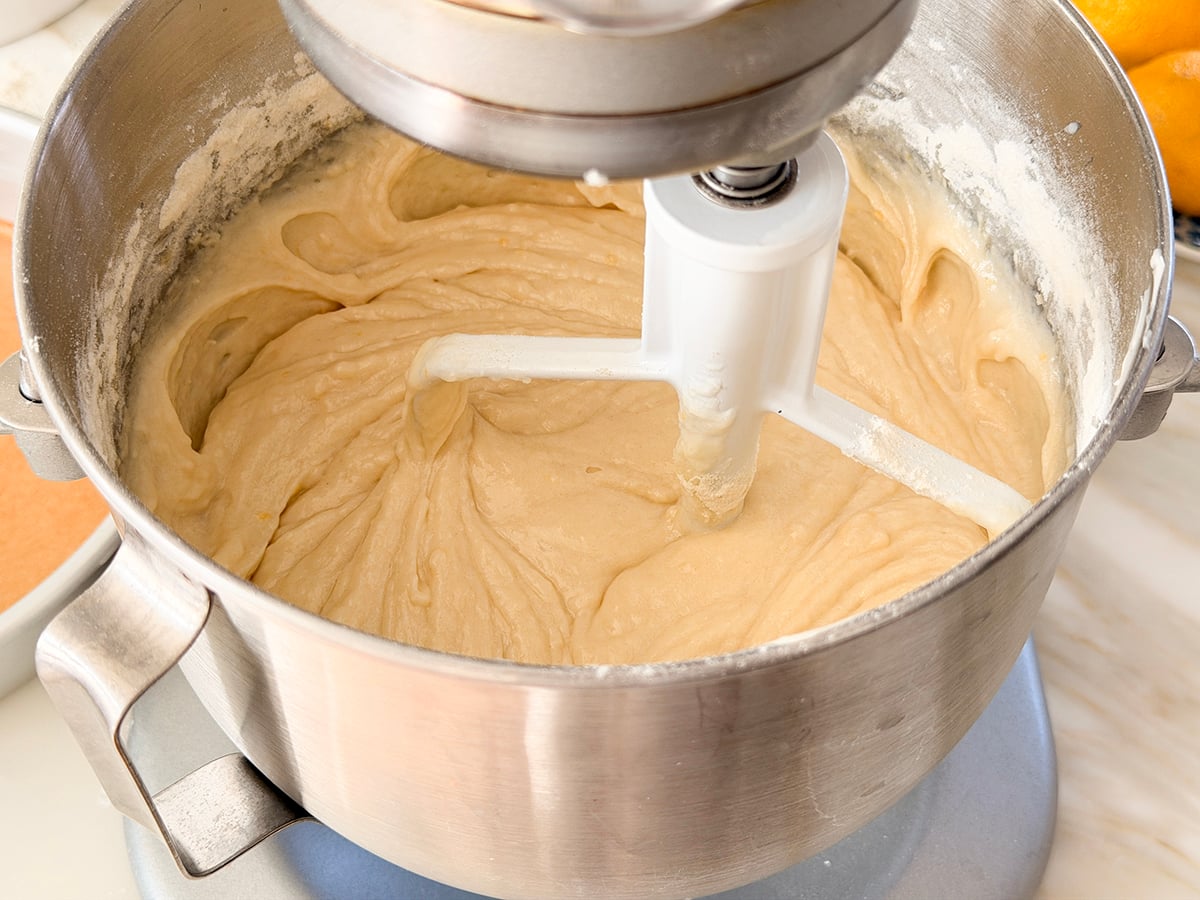
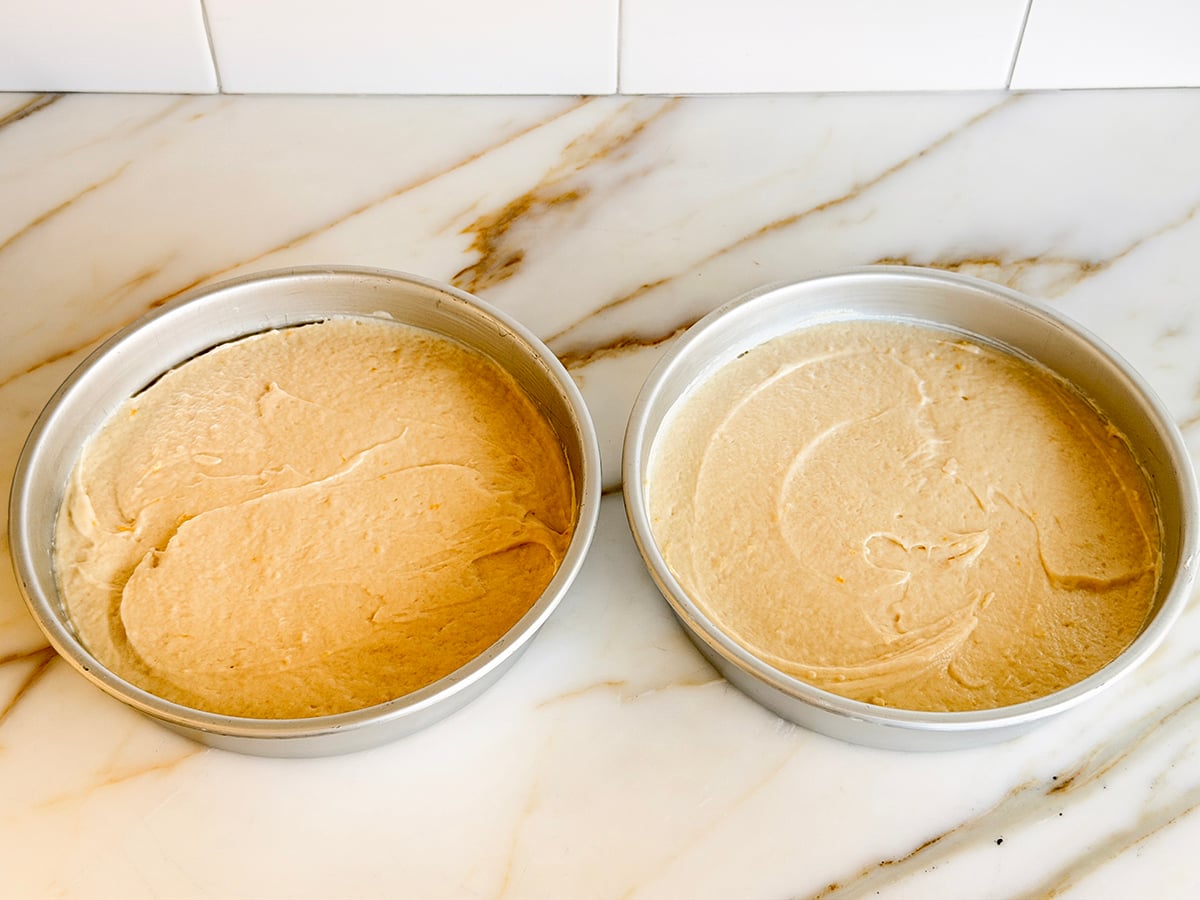
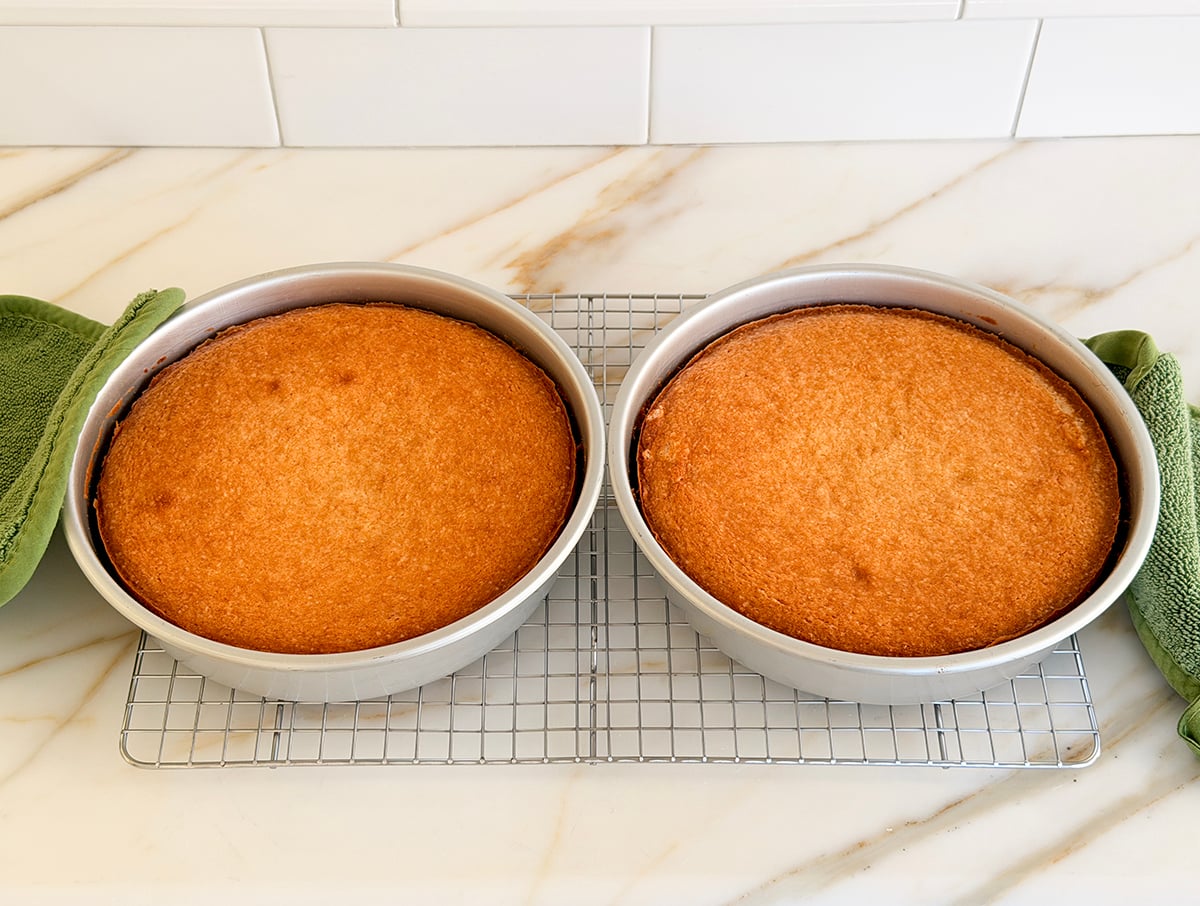
- Mix the dry ingredients. Whisk the dry ingredients in a medium bowl.
- Make lemon sugar. Use your fingers to combine rub together the sugar and lemon zest to release the lemon oils (= more lemon flavor!).
- Whisk the wet ingredients. Next, beat the butter in the bowl of a stand mixer until it’s smooth, light, and fluffy. Then, add the lemon zest sugar one cup at a time, mixing on medium-low speed. Once well combined, beat in the oil, yogurt, milk, lemon juice, and lemon extract until smooth. Scrape down the sides of the bowl, and beat in the egg whites. If preferred, you can use an electric hand mixer instead, beating the wet ingredients in a second large bowl on medium-high speed.
- Combine. Add the flour mixture to the bowl of wet ingredients, and mix just until combined. It’s a fairly thick batter. So, be careful not to overmix!
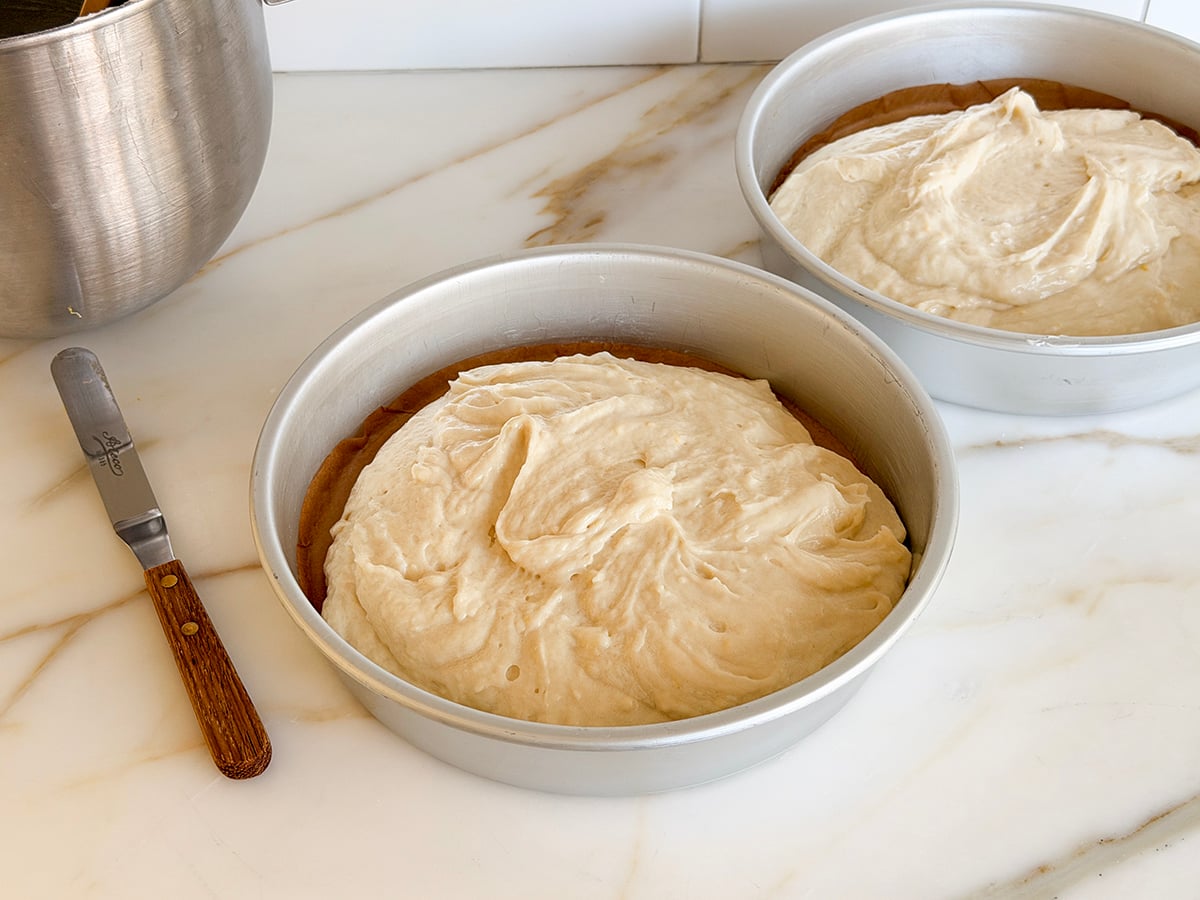
- Bake. Divide the cake batter evenly between two greased cake pans lined with parchment paper and bake until they’re golden brown, spring back when gently touched in the center, and a toothpick inserted into the center comes out clean.
- Cool. Let the lemon cakes cool in the pans slightly. Then, transfer them to a wire rack to cool completely.
Make the Lemon Buttercream Frosting
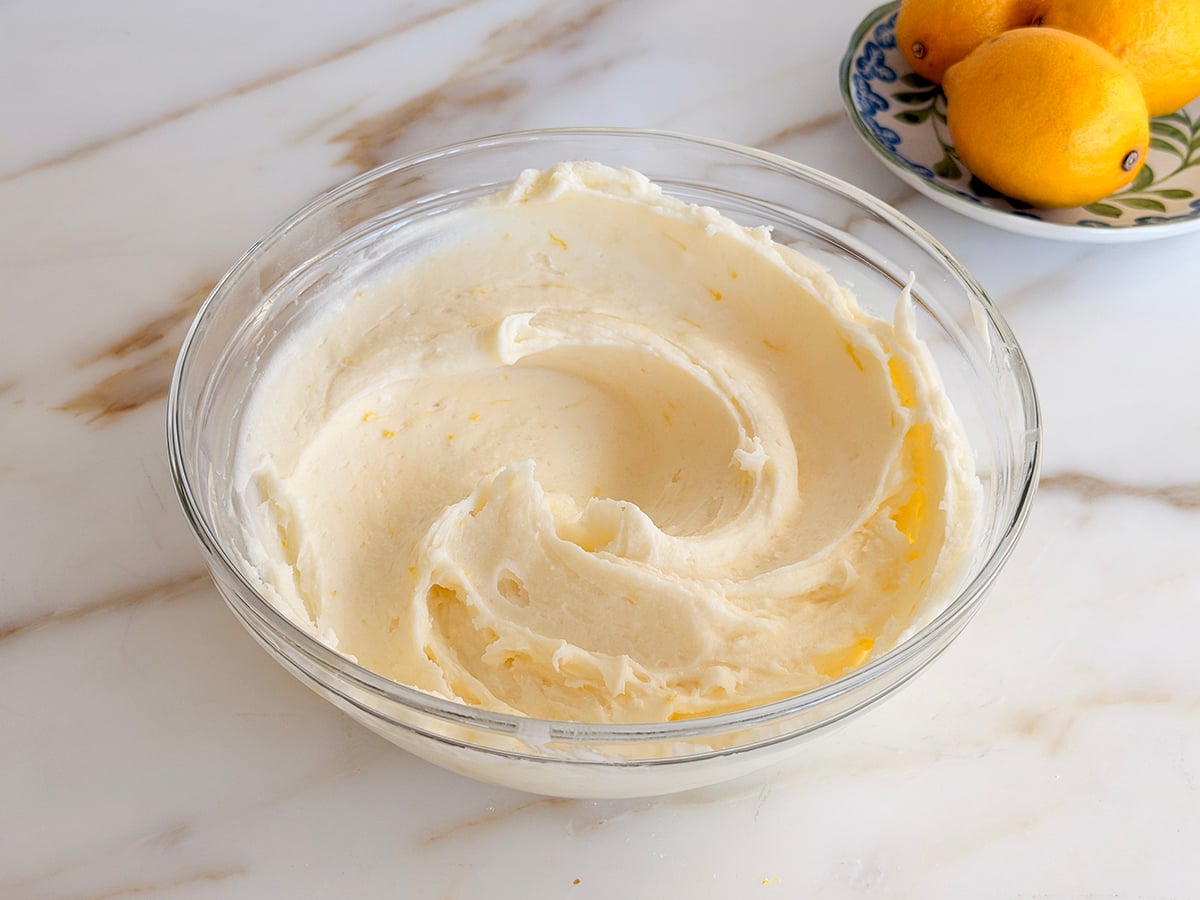
Use my Lemon Cream Cheese Buttercream recipe to make the frosting, which you can do well in advance and refrigerate or freeze. Bring to room temp and stir well before using.
Assemble the Cake
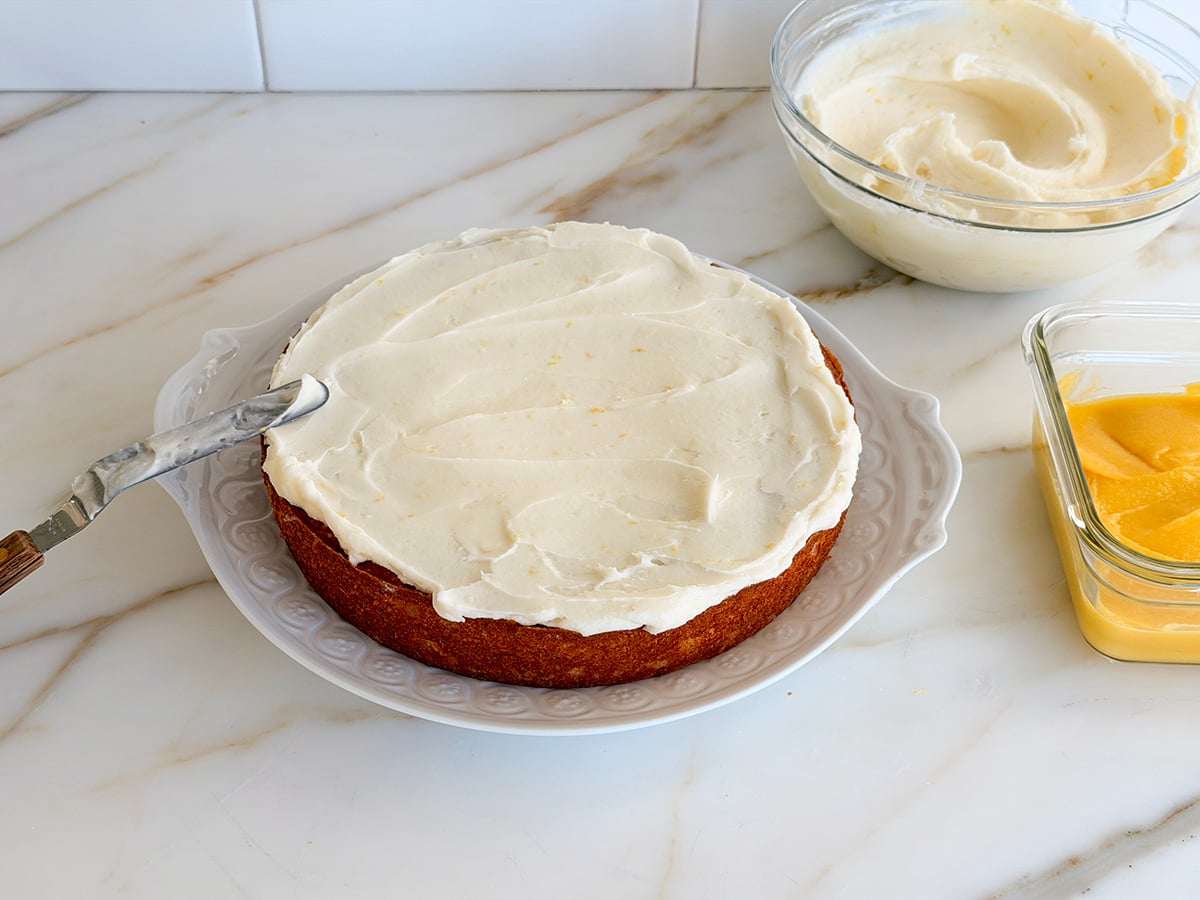
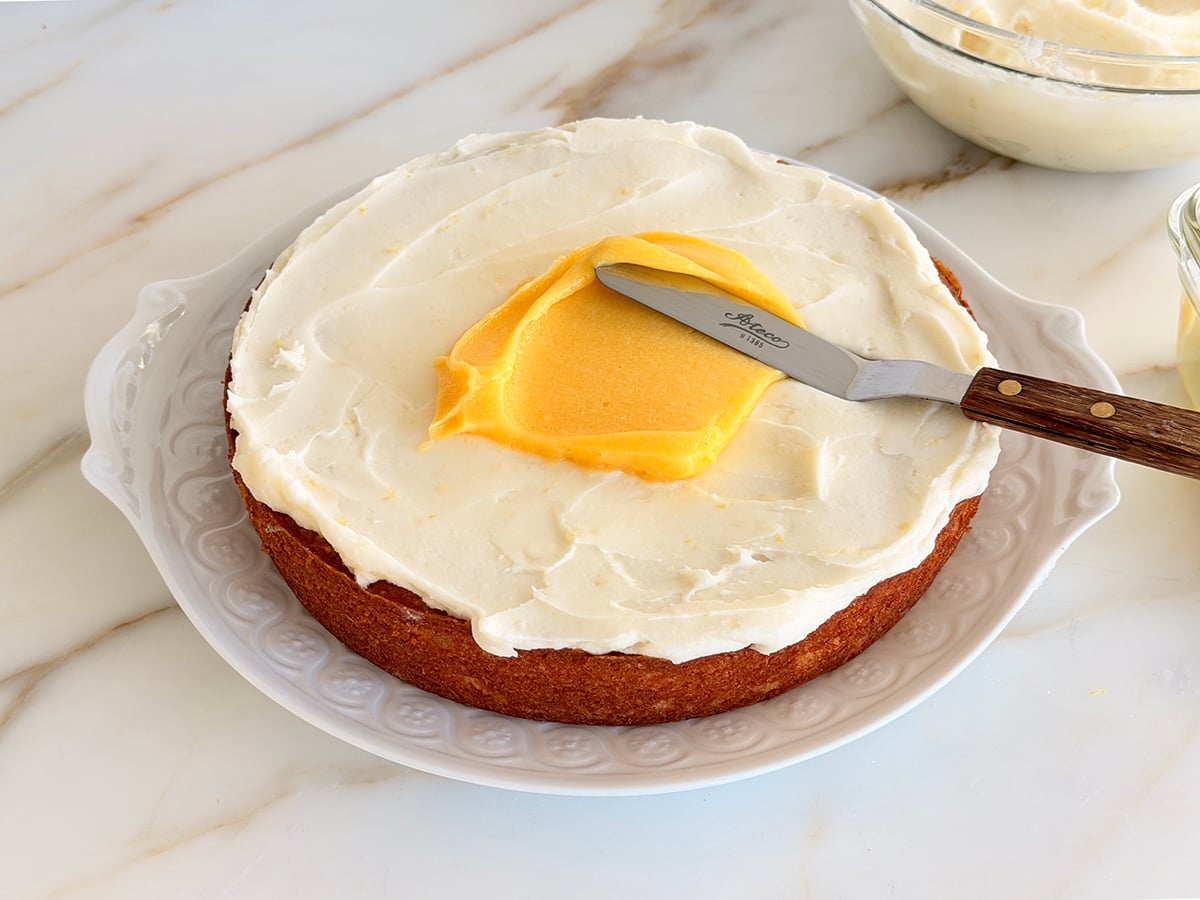
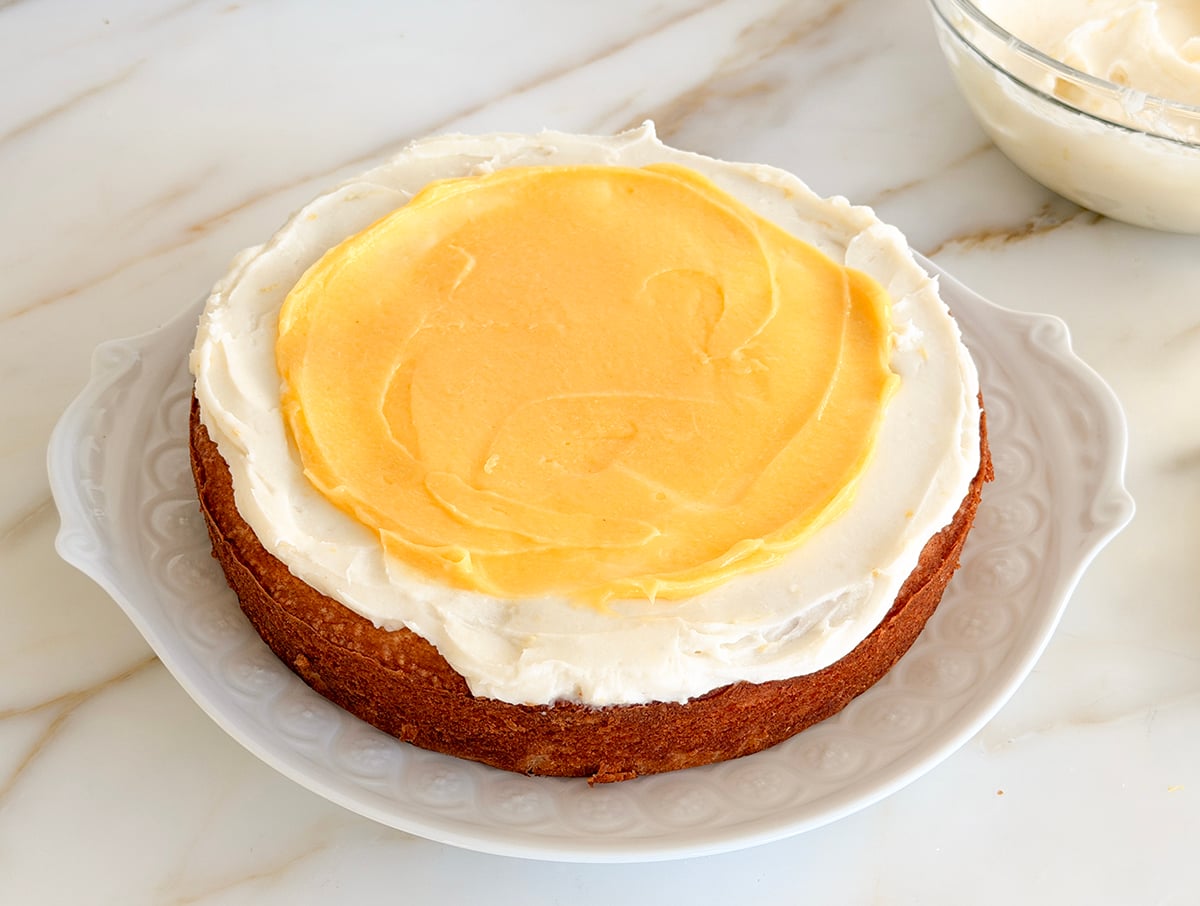
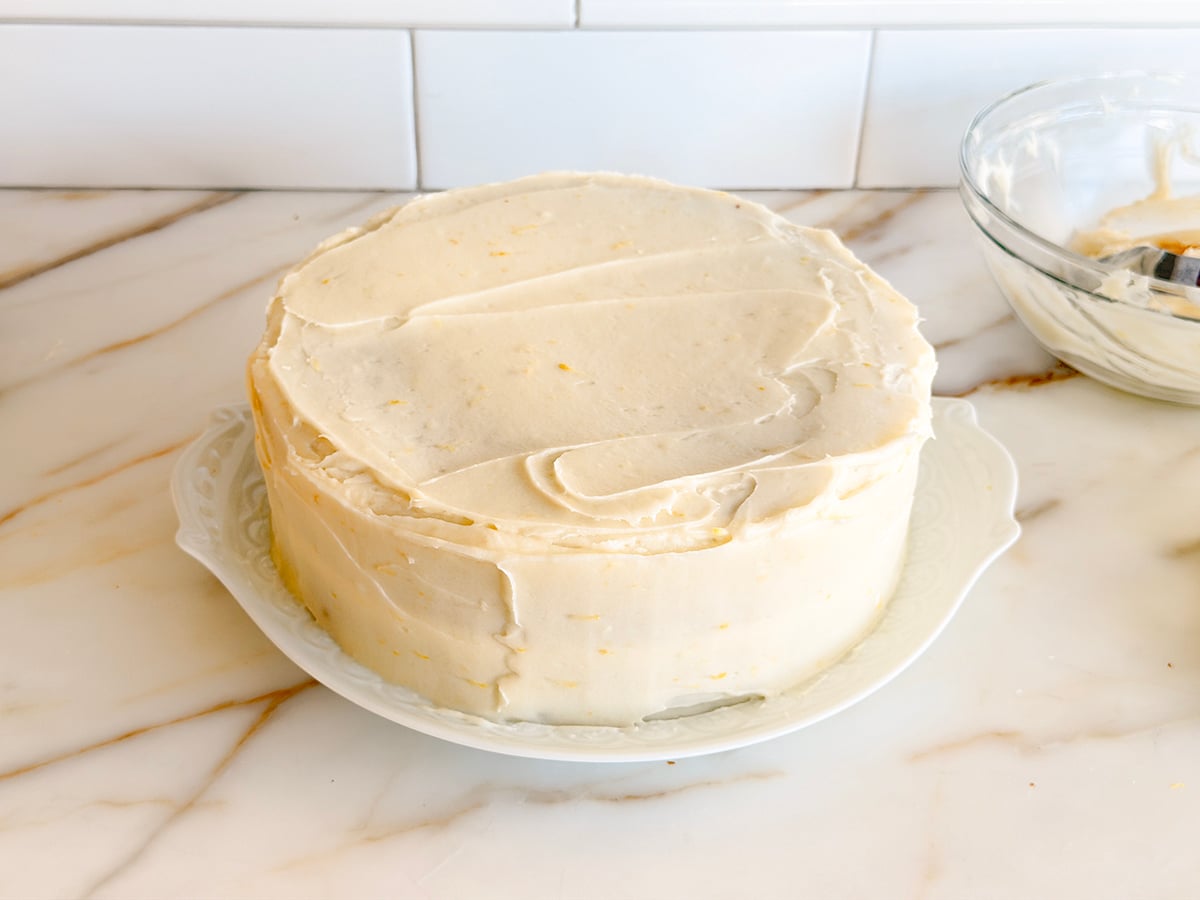
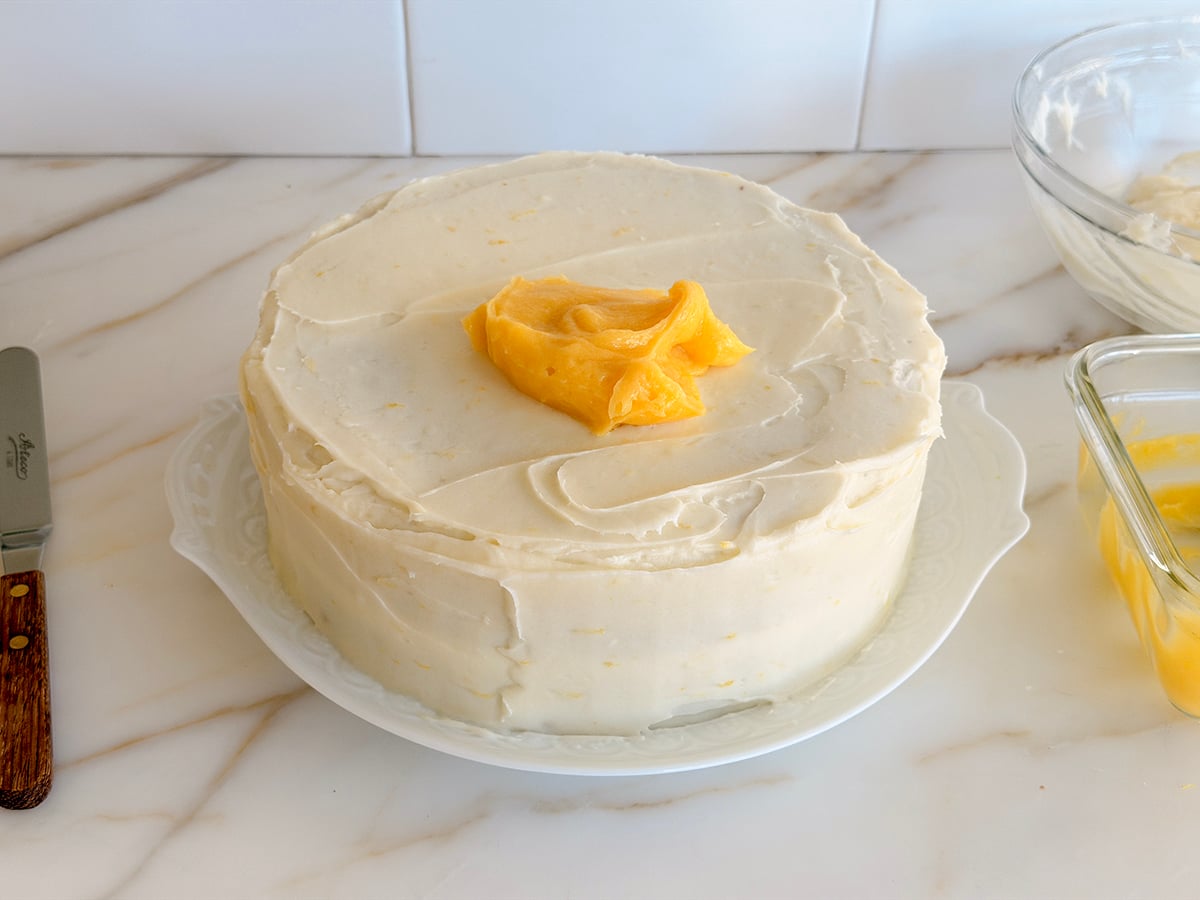
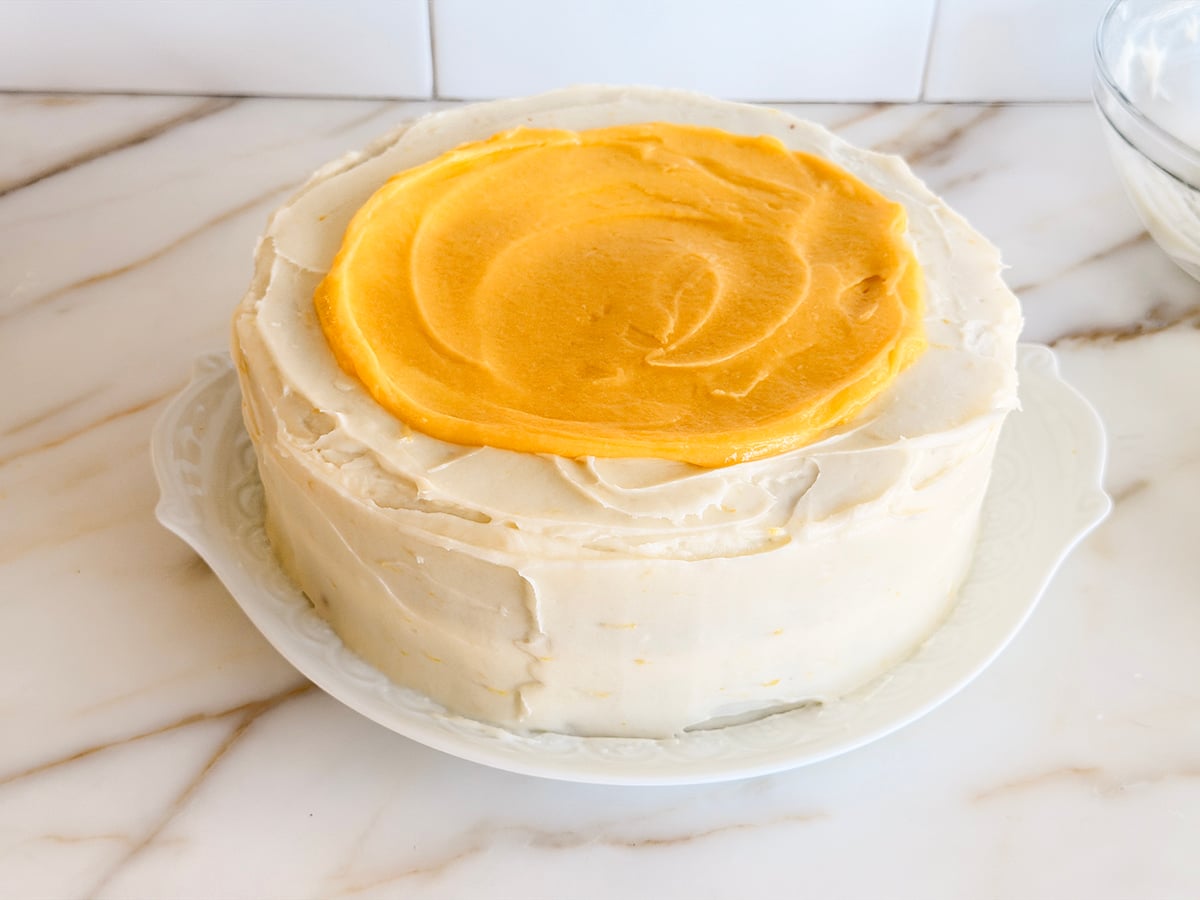
- Level. If your cake layers are domed on top after baking, use a serrated bread knife to cut the dome off the top of the cake layers. This helps them lie flat. Place one layer of cake on a serving platter or cake stand.
- Layer. Spread part of the buttercream evenly over the cake, making sure it reaches all the way to the edges. Then add part of the lemon curd, spreading it out evenly but leaving an inch free from the curd around the perimeter. This prevents it from oozing out!
- Repeat. Center the second cake layer evenly on top of the first, and repeat with the second layer, spreading buttercream over the top and frosting the sides of the cake. Then, spread the remaining lemon curd on top.
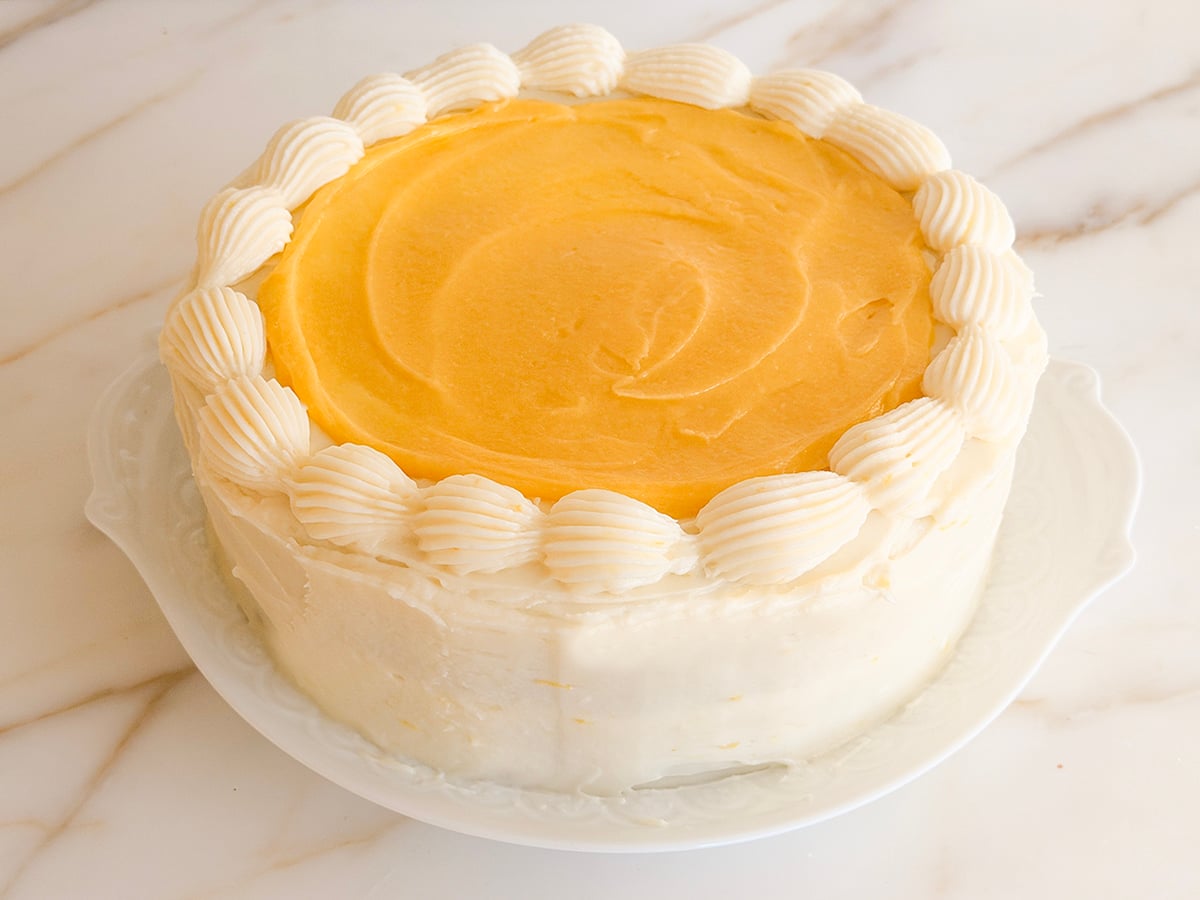
- Decorate. Pipe or spread frosting around the perimeter of the top of the cake to create a border over the curd. The cake looks gorgeous with this, or you can garnish the finished cake with piped buttercream or thin lemon slices for a simple, beautiful presentation.
- Serve. Slice the cake, and enjoy immediately. Or let it chill uncovered in the fridge, and bring it to room temperature to serve.
My Top Tips for Success
- Use room temperature ingredients. Bring the butter, cream cheese, egg whites, yogurt, and milk to room temperature before mixing. This helps the batter blend smoothly and creates a lighter, more even cake texture.
- Don’t overmix the batter. Once the flour mixture is added, mix just until the ingredients are incorporated. Overmixing can develop too much gluten, which may result in a dense batter instead of the soft, moist cake we want.
- Check for doneness early. The exact baking time will vary depending on your oven. For a perfect lemon cake, begin checking the cakes for doneness around the 25-minute mark.
- Cool the layers completely before frosting. If the cakes are even slightly warm, the frosting can melt and slide off the layers.
Lemon Cake Recipe
Ingredients
For the Cake:
- 3 cups unbleached all-purpose flour
- 2 teaspoons baking powder
- 1/2 teaspoon baking soda
- 1/2 teaspoon kosher salt
- 2 cups granulated sugar
- Juice and zest of 1 lemon
- 1/2 cup unsalted butter, softened, plus more for coating pans
- 3/4 cup neutral oil
- 1/2 cup plain whole milk yogurt
- 3/4 cup whole milk
- 2 teaspoons lemon extract
- 5 large egg whites, room temperature
Lemon Curd:
- 2/3 cup lemon curd, cold
Lemon Cream Cheese Frosting:
- 3 cups lemon cream cheese frosting
Instructions
- Arrange an oven rack in the middle position and preheat the oven to 350°F. Coat 2 9-inch cake pans lightly with oil spray or butter. Line with parchment circles and coat the parchment lightly with more oil.
- In a medium bowl, whisk together the flour, baking powder, baking soda, and salt. Set aside.
- In a medium bowl, use your fingertips to rub the sugar together with the lemon zest until fragrant. Set aside.
- In a stand mixer fitted with the paddle attachment, cream the butter on high speed until it is smooth, light, and fluffy. On medium-low speed, add the lemon zest sugar one cup at a time. Stop and scrape down the bowl as needed. Beat until combined, light, and fluffy, about 2 minutes.
- Add the neutral oil, yogurt, whole milk, lemon juice, and lemon extract. Beat until smooth. Scrape down the bowl and add the egg whites. Beat on medium speed until smooth.
- Add the flour mixture and beat on low speed or by hand just until combined and smooth, another minute.
- Divide the batter evenly among the prepared cake pans and smooth the tops with an offset spatula. Bake the cakes for 28 to 30 minutes, or until they are golden, spring back lightly when touched in the center, and a toothpick inserted in the center comes out clean.
- When the cakes are done baking, cool them in their pans for 10 minutes, then remove the cakes and cool completely on wire racks.
- To assemble the cake, first cut the dome off of each layer if needed. Use a serrated bread knife to cut the dome from the tops of the layers so that they are flat. Place one layer of cake on a serving platter or cake stand. Top with about 1/3 of the buttercream and spread it evenly to the edges. Spread 1/3 cup of the lemon curd on top of the frosting evenly, leaving an inch free of curd around the perimeter. Center the second layer evenly on top of the first layer and top with 1/3 of the buttercream, spreading it evenly to the edges.
- Frost the sides of the cake.
- Place the remaining 1/3 cup lemon curd in the center of the top layer and gently spread it evenly to within one inch of the edge. Pipe or spread the frosting around the perimeter of the top to create a border over the curd.
- To serve, gently slice the cake with a serrated knife. Serve immediately, or chill uncovered before bringing to room temperature to serve.
Notes
Nutrition
Nutrition information is automatically calculated, so should only be used as an approximation.