This post may contain affiliate links. Please read our disclosure policy.
I used to volunteer a lot. I hate to say ‘used to,’ but I’m trying to shame myself into getting back into it. When I volunteered in East Lansing and I’d see people I knew, they’d say “the apple doesn’t fall far from the tree,” referring to my parents and their community involvement. Seems that my volunteer projects have typically had to do with food, and the food of choice for many pantries that serve meals is, of course, soup.
The scent of the bean soup that I served at Christo Rey in Lansing long ago remains imprinted on my brain. This wasn’t a scent that made me want to eat the soup—far from it—and I wondered why the food served to the poor couldn’t taste good, even though it was done on a budget.
When I saw a call for soup-makers at my church in Chicago, St. Vincent de Paul, I raised my hand. I had been serving breakfast in their soup kitchen for a while and thought I would give the other soup makers a run for their money. The soup-makers were simply asked to stop by the church to pick up containers for transporting the soup from home.
I knew we served a lot of hungry people in the kitchen there, but hadn’t given a thought to how many when I volunteered. The containers were ginormous. Huge. Four containers at five gallons each equals twenty gallons. If only I had done my math beforehand.
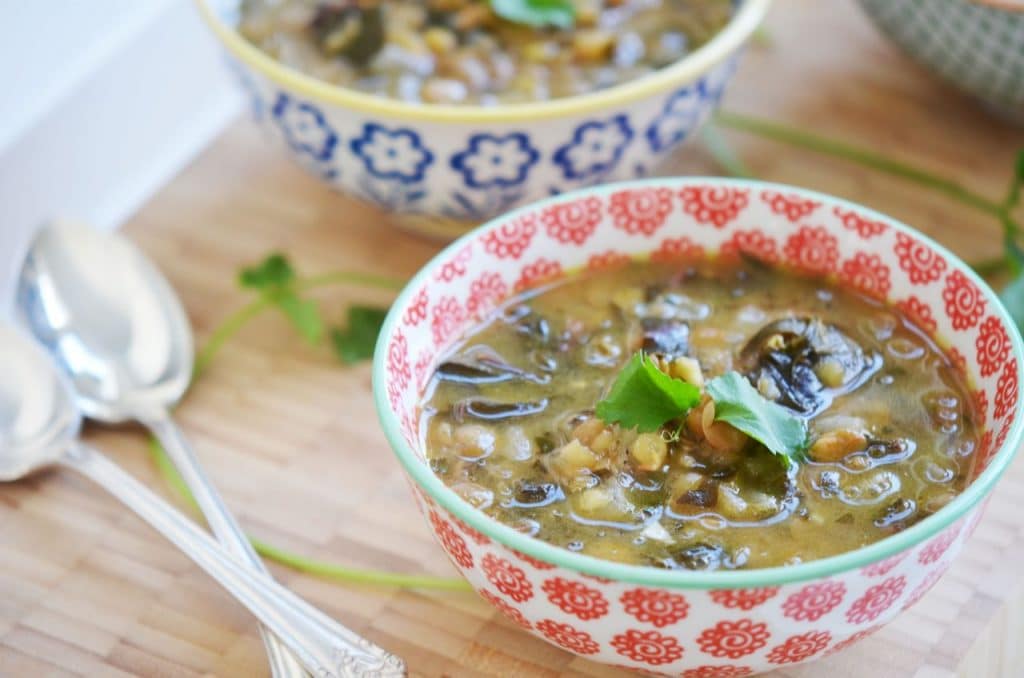
Healthy, hearty, delicious soup (not tasty soup; delicious soup) that I could make with ease was top of mind. Lebanese rushta is the simplest soup around, a mix of lentils and thin pasta noodles cooked in water with buttery sautéed onions added to the mix. Rushta is loved by a lot of Lebanese. Plus I could afford to make many gallons of this soup a little easier than chicken noodle or vegetable beef.
My hubris in thinking I could make mass quantities without a recipe or ratio guide was astounding. I based my ability strictly on growing up in a large Lebanese family. We know large quantities of food, I thought to myself, and held that as my mantra of the day even though I personally had not cooked large quantities of food, ever. Perhaps that hubris has served me well along the line for certain aspects of culinary school. But for the soup kitchen, not so much. I went after the soup making without much tasting along the way, and by the end I had gallons upon gallons of flavorless lentils that had absorbed most of the liquid and looked more like Mama Bear’s porridge than anything you’d want to eat.
Soup was due that day, however, and I had spent the entirety of it cooking, so I wasn’t going to back down now. I salted, I peppered, trying to give the soup the idea that it tasted good even though it didn’t. That’s surface seasoning, the kind of doctoring up that doesn’t heal the wound. When I went in to serve my soup, I didn’t say that what we were serving came from my kitchen. The other servers didn’t say much, until we were ladling up the thick soup alongside the random assortment of donuts and white bread bologna and mustard sandwiches for breakfast (not kidding). Is it soup?, one woman asked. Who knows, I said. Then I watched as cup after Styrofoam cup of my soup was tasted by our homeless and down-and-out customers, and then…thrown away.
I’ve had a kind of vendetta against rushta ever since it failed me. Because of course it was the soup’s fault. Whenever I hear cousins speak lovingly about their little pots of rushta, I think to myself that they just like it because they’re supposed to, or that one day I’m going to show that rushta, in a small pot, how to taste good. My friends, that day has come. Lebanese cookbooks have taught me about all kinds of variations on certain traditional dishes that involve the real flavor-makers in any dish: herbs, garlic, greens, tartness, and seasoning that starts at the very beginning. Because no matter how hungry or tired or destitute you are, you still want to eat something that tastes good, and you know it when you do.