
This post may contain affiliate links. Please read our disclosure policy.
This quick pickled asparagus recipe is the easiest way to preserve the freshest asparagus during asparagus season, creating extra-crisp, tangy spears perfect for cocktail hour, alongside an amaro cocktail, charcuterie boards, or adding to your favorite vegetables and salads.
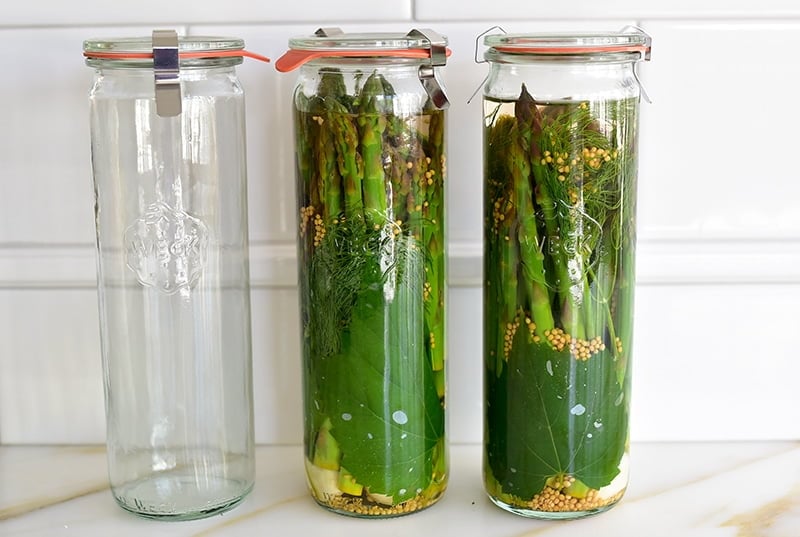
I’m a big fan of the pickling process and rotate through various options throughout the year, making everything from pickled onions to Lebanese pickled turnips, dilly beans, green beans, and homemade asparagus pickles, depending on the time of year and what looks best at the market.
Over the years, I had heard that grape leaves are the secret to the best pickled asparagus recipe because they help create especially crunchy green spears. Still, I admittedly ignored the advice for a long time. After all, if I was going to go through the process of identifying grape leaves and working with them, it was going to be in order to make Lebanese stuffed grape leaves first and foremost!
That is, until a friend casually asked if grape leaves actually make a difference when making pickled asparagus. A teacher at heart, I was sheepish that I didn’t know, so I had to find out for myself. During asparagus season that spring, I gathered a few grape leaves and got to work, using the same refrigerator pickling process I rely on for my mixed pickle jar and sweet pickle chips.
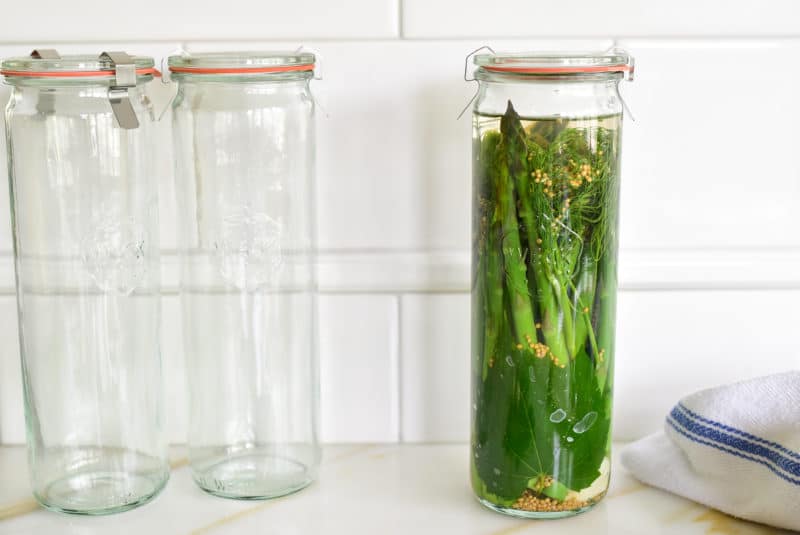
The result? Very crisp, very crunchy, tangy spears with fresh grape leaves and the perfect salty brine. Scroll down to the ingredients section to find out how the grape leaves function in the jar. I officially consider these homemade asparagus pickles a success! The grape leaves tucked into the bottom of each jar alongside fresh dill sprigs make the canning jars look especially beautiful and professional. Whether you use a tall jar, a quart jar, or wide-mouth pint jars, the finished pickles are stunning enough to use as a hostess gift. A visual treat every time you pull a jar from the fridge!
Even though this is a refrigerator pickle recipe and not one designed for water bath canning or a boiling water canner, it still captures everything I love about traditional pickling recipes. The vinegar brine, fresh dill, mustard seeds, and garlic create a classic pickling brine with bold flavor and plenty of crunch. If it’s your first time making quick pickles, this is an especially easy place to start because there’s no need for all of the things (canning pot, two-piece metal canning lids, or managing inch headspace and air bubbles) like you would with shelf-stable preserves. That said, if you are interested in canning for shelf life (jars that can stay at room temp a long time before opening), get the equipment and go for it, following the manufacturer’s instructions!
Ingredients You’ll Need
Please be sure to scroll down to the recipe card for the complete ingredient list and instructions!
- Asparagus – Fresh asparagus spears become perfectly crisp-tender after a quick blanch and soak up all the tangy, garlicky flavor from the brine. I recommend using thicker asparagus spears, which hold their texture especially well for pickling. Trim any woody ends before you begin.
- Apple Cider Vinegar – This adds a slightly sweet, mellow tanginess to the brine. White wine vinegar, rice vinegar, or standard white vinegar also work well if that’s what you have on hand.
- Salt – Kosher salt seasons the brine and helps preserve the crisp texture of the asparagus. Be sure to use kosher salt rather than table salt for the best flavor and consistency (Also: table salt is saltier, so amounts would need adjusting as it is not a 1:1 swap).
- Sugar – A small amount of sugar or honey balances the acidity of the vinegar and rounds out the flavor of the pickles without making them sweet.
- Garlic – Whole large garlic cloves infuse the jars with savory flavor as the asparagus pickles in the refrigerator.
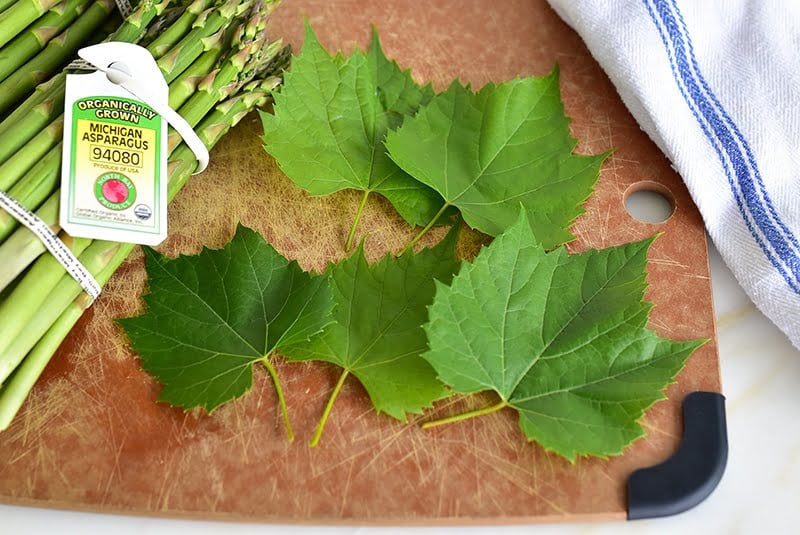
- Fresh Grape Leaves – Grape leaves are indeed the secret ingredient for extra crunchy pickles! They contain natural tannins that help keep the asparagus crisp while adding a subtle earthy flavor.
- Fresh Dill – This creates a classic pickle flavor and a bright, herbaceous finish. Looks beautiful in the jar, too.
- Mustard Seeds – These add subtle warmth and gentle spice to the brine, giving the pickles extra depth of flavor far better than most store-bought varieties.
How to Pickle Asparagus with Grape Leaves
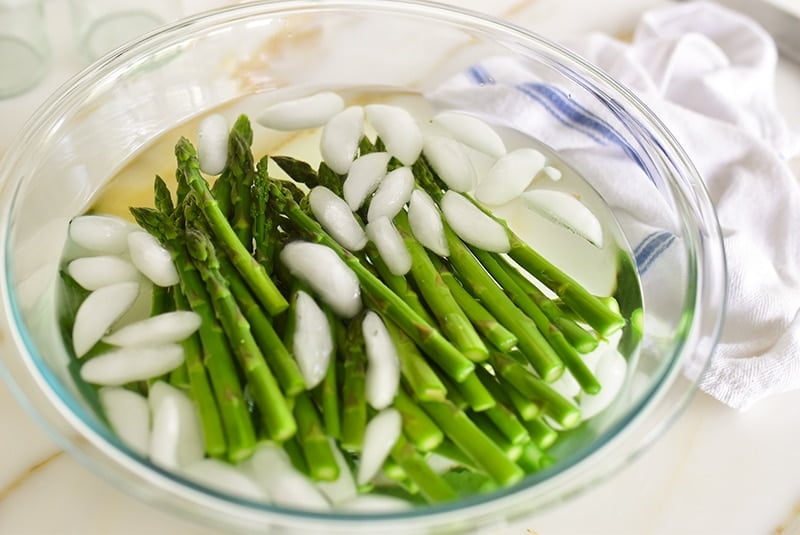
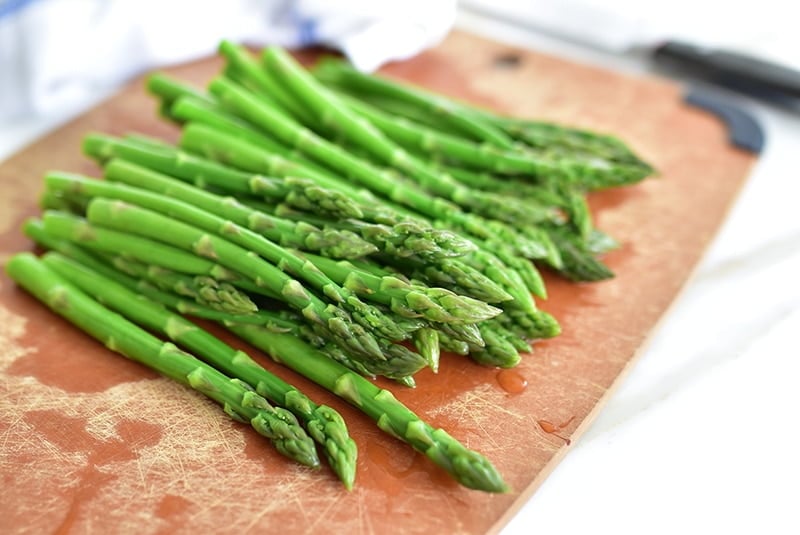
- Blanch the asparagus. Bring a large pot of water to a boil, and dip several spears of asparagus into the liquid. I like to use a spider or large tongs to prevent burning my fingers! Hold the veggie spears in the water just until they’re vibrant green, and immediately transfer them to an ice bath to stop the cooking process. Repeat blanching all your spears.
- Prepare the brine. Boil water, vinegar, salt, and sugar in a medium saucepan over medium heat, stirring until the sugar and salt dissolve. Let the hot brine cool completely. I transfer it to a glass measuring cup or metal bowl to speed up the process.
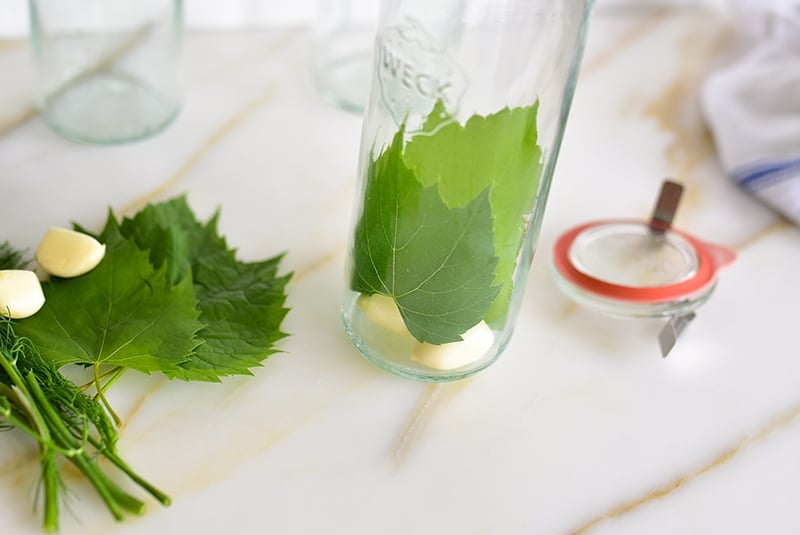
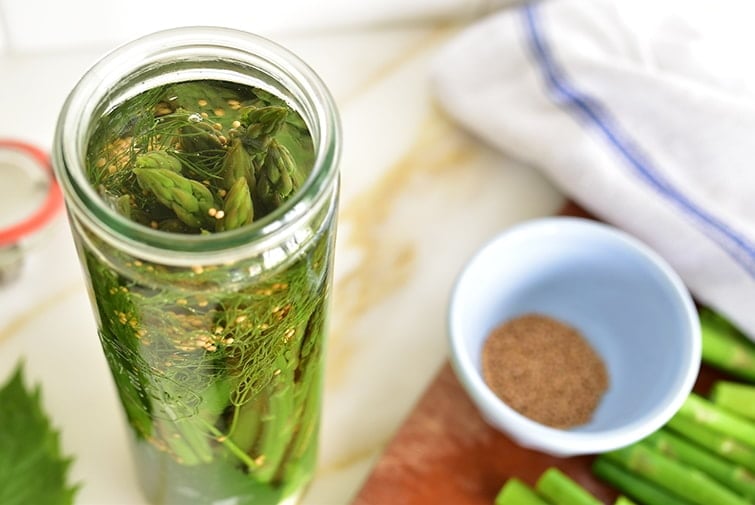
- Combine. Place two grape leaves in each pickling jar (I use tall Weck jars or mason jars), making sure the vein sides are facing in. Then, add garlic cloves, and fill the jars with the blanched asparagus. Add a dill spear to the outer edge of each jar, and finish with a small amount of mustard seeds.
- Pickle. Pour the cooled brine into the jars, seal, and refrigerate them until they’re tangy and crisp.
My Favorite Ways to Serve
These asparagus pickles are crisp, tangy, and incredibly versatile. I love keeping a jar in the refrigerator for easy snacking and quick additions to meals throughout the week. Here are some of my favorite ways to serve them:
- Serve alongside grilled meats, roasted za’atar chicken, or fish for a bright, briny contrast.
- Add them to an antipasto platter or mezze platter with hummus, labneh dip, olives, feta, and warm pita bread.
- Chop and stir the asparagus into Lebanese potato salad, Greek orzo pasta salad, falafel bowls or grain bowls for extra crunch and acidity.
- Tuck spears into sandwiches, wraps, or burgers in place of traditional pickles.
- Arrange them on a charcuterie board or cheese board with cured meats and sharp cheeses.
- Serve them as part of a brunch spread with eggs, smoked salmon, and toast.
- Enjoy them straight from the jar as a crisp, salty snack.
- Add them to a relish trayfor Bloody Marys or savory cocktails.
How to Store
These asparagus pickles are refrigerator pickles and should always be stored in the refrigerator. Don’t store at room temperature like pickles made and packed with a water bath canner.
Keep the jars tightly sealed. Allow the pickles to cure for at least a couple of days and ideally about one week before serving for the best flavor and texture. If you sneak a taste after a day, you’ll find deliciousness there too.
Then, store the pickled asparagus in the refrigerator for up to 3 weeks. Be sure the asparagus remains submerged in the brine to help keep it crisp and flavorful!
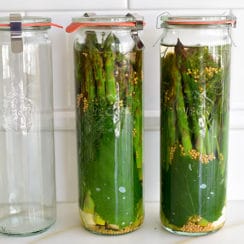
Pickled Asparagus with Grape Leaves
Equipment
- 1 Large Pot
- 1 Large Bowl
- 2 Pickling Jars
Ingredients
- 2 pounds long, thicker asparagus
- 2 cups water
- 1/3 cup apple cider vinegar (white wine vinegar or standard vinegar are also fine)
- 1 tablespoon kosher salt
- 2 tablespoons sugar (or honey)
- 4 cloves garlic, peeled
- 4 small fresh grape leaves
- 2 sprigs fresh dill
- 1 teaspoon mustard seeds
Instructions
- To blanch the asparagus, bring a large pot of water to boil.
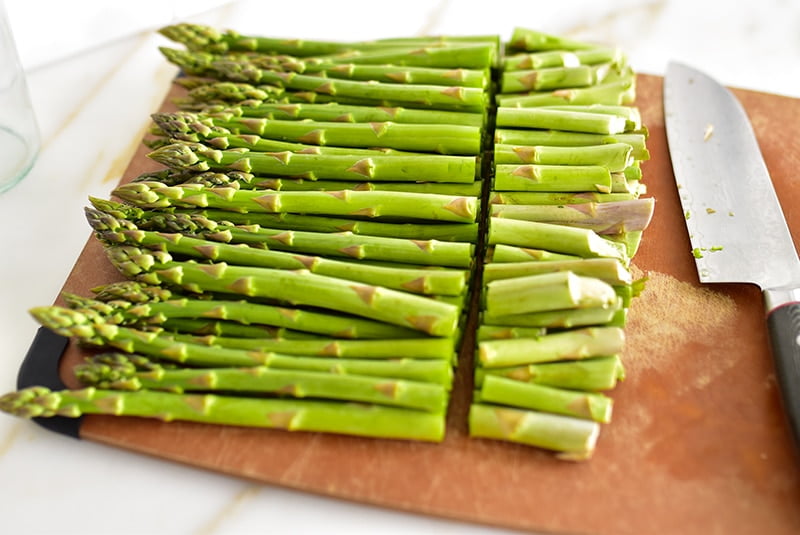
- Meanwhile, stack the asparagus on a cutting board and evenly cut the stems about 2 inches from the bottom. Discard cut stems.
- Fill a large bowl with ice and water, stirring to separate the ice cubes. Place this near the pot of boiling water, as the asparagus will go directly from blanching into this ice bath.
- Using a spider or large tongs, dip several spears of asparagus into the boiling water and hold there for 15 seconds and not longer! Repeat with the rest of the asparagus, leaving all of them in the ice bath together while the brine is made.
- To make the brine, combine the water, vinegar, salt, and sugar. Bring the mixture a boil over medium heat, stirring until the salt and sugar begin to dissolve. Remove from the heat and stir until dissolved. Let the mixture cool; you can pour the brine into a glass measuring cup or a metal bowl to speed up the cooling.
- Remove the asparagus from the ice bath to a board to drain.
- Place two grapeleaves in the each jar with vein-side facing in. Add two garlic cloves to each jar. Carefull fill each jar tightly with asparagus, tips at the top of the jar. Tuck a dill spear into the outer edge of each jar so it's visible. Add 1/2 teaspoon of mustard seeds to each jar.
- Using a funnel if you have one, pour the brine into the jars, half in each jar. Put the lid on the jars and refrigerate for about a week before serving. If you eat them sooner, they'll still be delicious!
Notes
Nutrition
Nutrition information is automatically calculated, so should only be used as an approximation.















Hi there-
I was wondering if I could add grape leaved to a canned red cabbage slaw instead of pickle crisp to keep it crispy??
This is likely to work! I have not tested with slaw but it makes sense that the leaf would do the same thing here as it does with other types of pickles like my Asparagus Pickles. Please report back if you try it!
Hi Maureen! This recipe looks very tasty. I can’t wait to try it!
Do you have to use sugar in the recipe? I **love** sour pickles; but I don’t like sweet pickles at all.
You can leave out the sugar but here you’ll find it just balances the acid and does not make for a sweet pickle.
Hi Maureen – fresh grape leaves are not available where I live in the Canadian Rocky Mountains. We can get preserved leaves in jars – will these work?
Love your recipes – just like my gramma’s.
Thanks so much Mary. I don’t know that the brined jarred leaves will impart the same effect, but it is an interesting idea worth trying (and I will too!).
Hi Maureen! I wonder if we’re related? Every time I try to find a recipe like my mom, yours are the ones that look and taste the most familiar. My mom was Caroline Abood Najjar. Her father was Daher Abood. We live in the Cleveland area. What do you think? Any relation?
Well Maryann, I just don’t know those names to be relatives but seems there would be some connection, somewhere on the tree! Thank you! And warm regards to my “cousins” there.