
This post may contain affiliate links. Please read our disclosure policy.
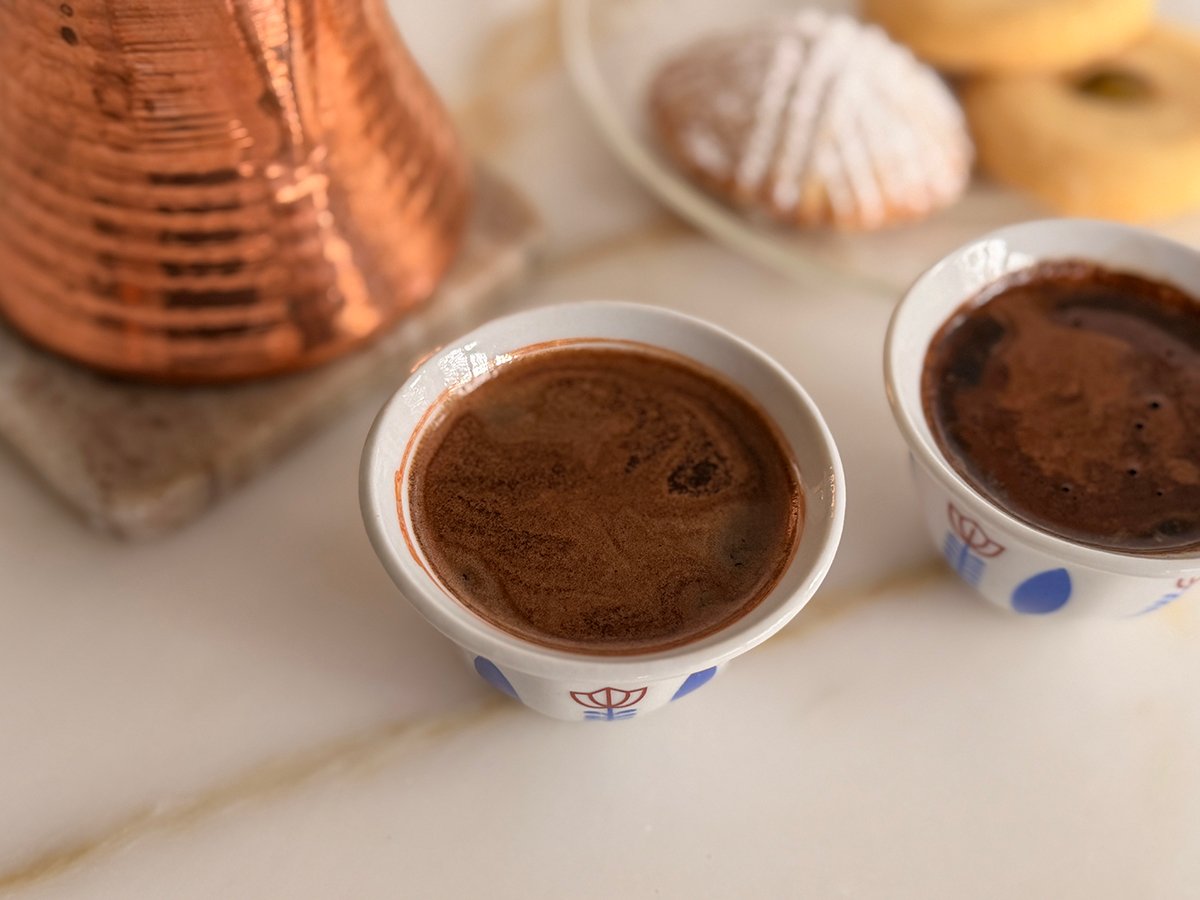
Arabic coffee is smooth, bold, and beautifully aromatic. It’s part of a tradition of hospitality. Here’s how to make Arabic coffee at home!

Why I Love Arabic Coffee
I am a huge drinker of coffee of all kinds, specialty coffee and standard drip–coffee lovers like me crave that deep, rich flavor (and hit of energy!).
The first time I tasted a cup of Arabic qahwa, it was part of a beautiful visit among elder relatives. The serving of coffee can truly be an art form, and it exudes the essence of Middle Eastern hospitality: a sip to drink, a conversation, a warm welcome. there was a subtle, wonderful warm spice note (bordering on citrusy notes). I discovered that it was cardamom, a very traditional way with Lebanese coffee. You can make the little cups with or without the cardamom, and with our without sugar. I love it with both because of the balanced flavor they bring to the strong cup of goodness.
Put a cookie on the side and your day just got a whole lot brigher!
Happy Cooking!
– Maureen
Brewed slowly until it reaches a froth, it’s served in small cups and meant to be savored. For anyone wondering, “What is Arabic coffee?” it’s a traditional Middle Eastern beverage that represents warmth, hospitality, and connection in every sip. Let’s dig into its origins and how to make it!
What Is Arabic Coffee?
Arabic coffee, also known as qahwa, qahwa arabyiyya, or Arabica coffee, is a type of coffee that is traditionally made with lightly roasted, finely ground coffee beans (Arabica beans) that are brewed slowly in water until the mixture is rich and aromatic. Some versions contain warm spices, like cardamom or even saffron.
Unlike Western coffee, Arabic coffee isn’t filtered and is typically served without milk or sugar, allowing the natural flavor of the coffee to shine through. The result is a smooth, dark colored drink with a slightly bitter finish that’s meant to be sipped slowly.
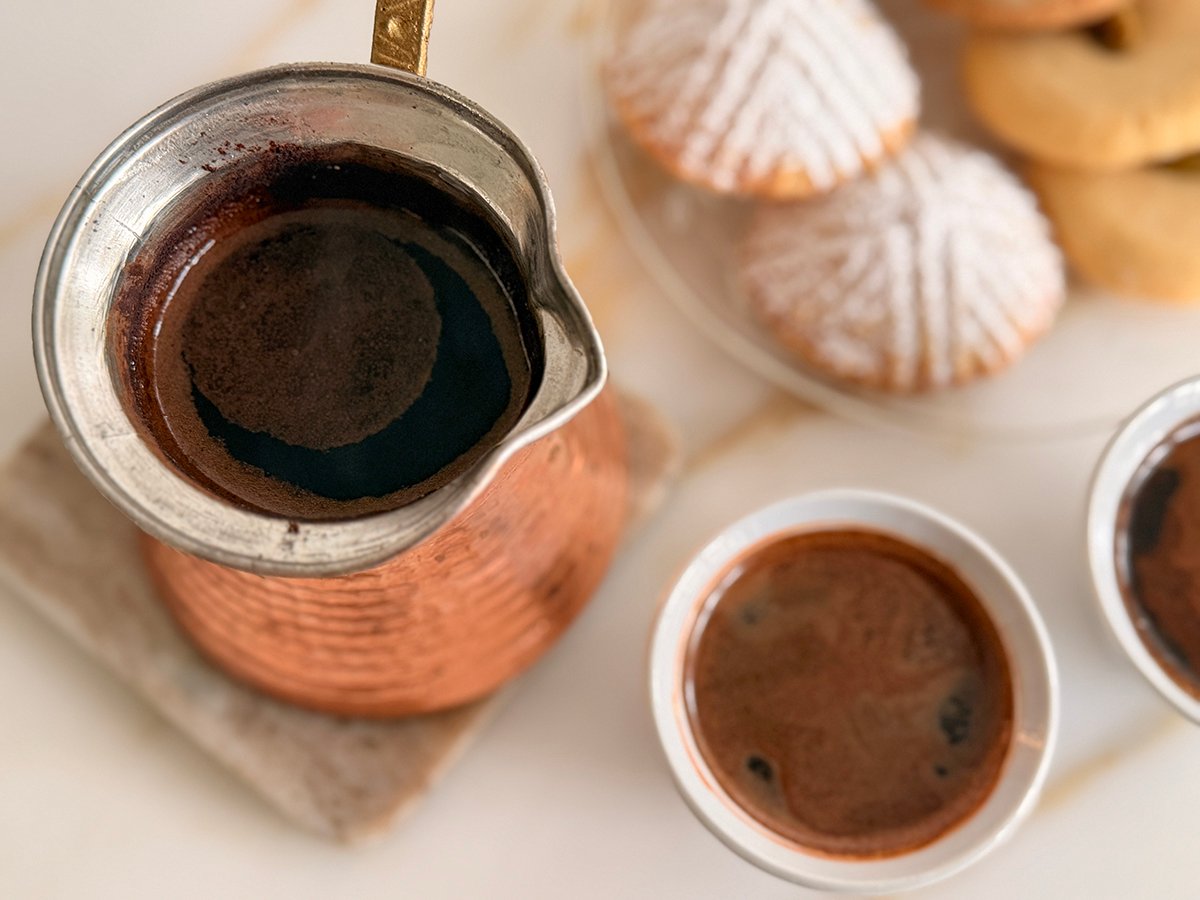
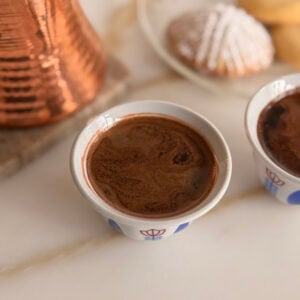
Often poured into small, handleless cups called finjan, Arabic coffee holds a special place in Middle Eastern culture. It’s served as a gesture of hospitality and respect, offered to guests upon arrival or shared during gatherings. We enjoyed it many times over on our visit to Lebanon with my mom years ago. It’s so much more than a beverage, it’s a meaningful tradition that represents generosity, connection, and community.
History and Origins
Arabic coffee has deep roots in the Arabian Peninsula, particularly Yemen, where coffee cultivation first began. By the 15th century, coffee had spread across the Middle East through trade routes, becoming central to Arab hospitality and social gatherings.
The method of brewing coffee in an ibriq (a small long-handled pot) or dallah (a traditional long-spouted pot) and serving it in small handle-less cups (finjan) remains a symbol of warmth and respect. Today, Arabic coffee connects generations, honoring centuries of tradition while adapting to modern kitchens.
How to Make Arabic Coffee
Making Arabic coffee at home is simple once you understand the method. The main point is to brew slowly so the coffee doesn’t boil over, and so that the fine grounds can settle at the bottom of the pot at the end of brewing.
Ingredients and Notes
Please see the recipe card below for the complete details and instructions!
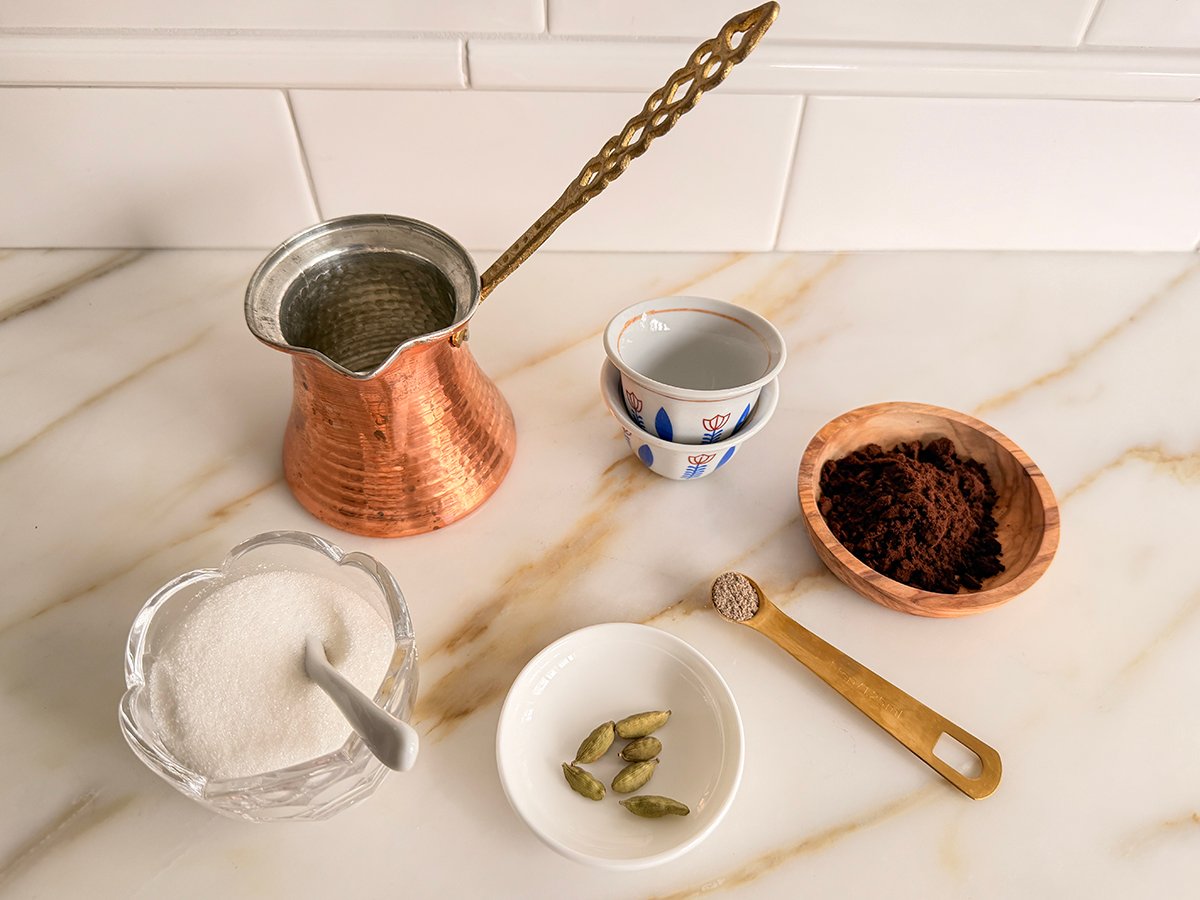
- Arabic Coffee (Qahwa): Look for lightly roasted coffee labeled as “Arabic” or “Saudi” coffee. It has a golden color and a delicate aroma.
- Water: Always start with cold, filtered water for a clean taste.
- Cardamom pods: Read all about Cardamom in my post; the pods look like dry green coffee beans, but inside are the little cardamom seeds that can be part of the ground coffee for Arabic coffee, or added to the brew while boiling. Ground cardamom works well too.
Arabic coffee is often enjoyed without sugar, accompanied by plain dates, stuffed dates, coconut date balls, or other sweets like ma’amoul cookies to savor the time (and balance the bitter taste!).
Tips for the Best Flavor
- Use fresh, quality coffee: Lightly roasted beans preserve the subtle, nutty flavor that defines Arabic coffee.
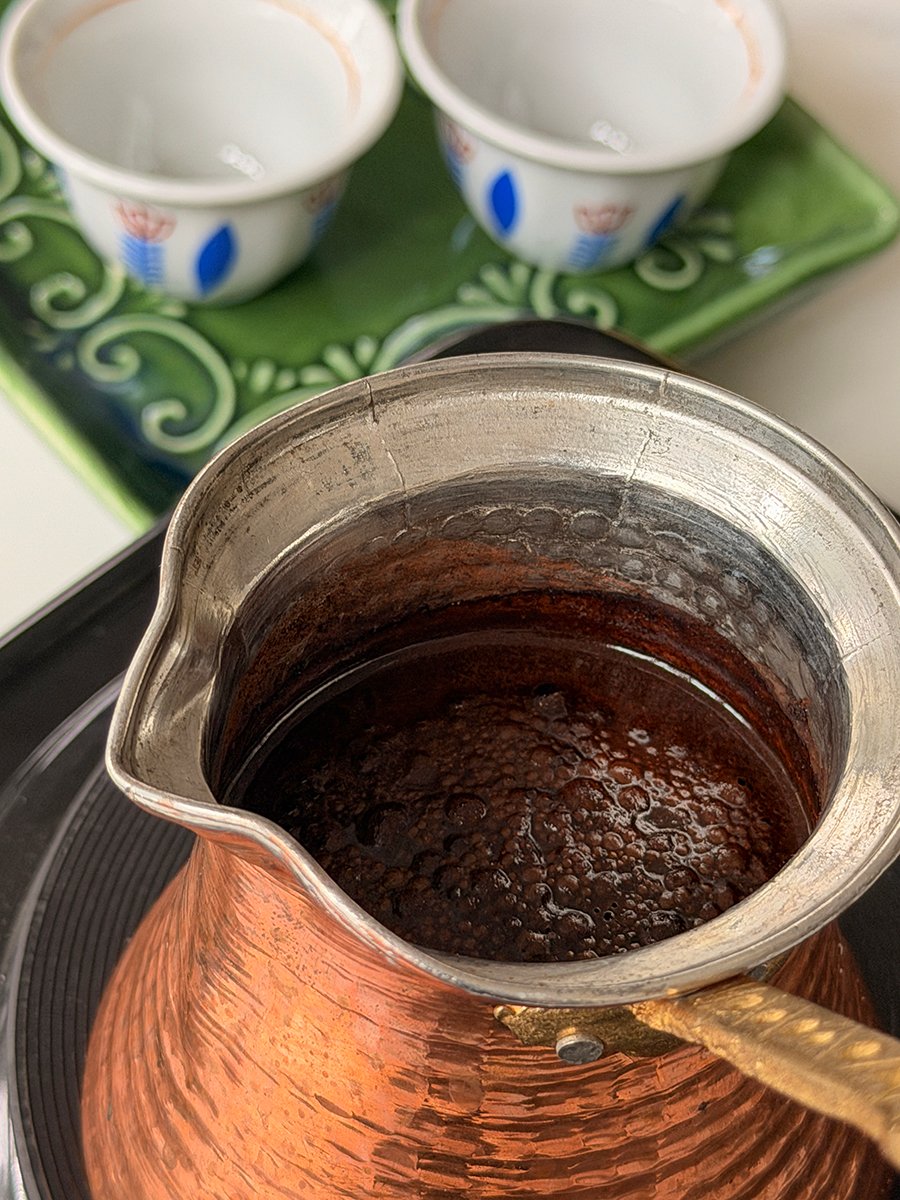
- Don’t overboil: Allow the coffee to foam gently. Boiling too long can make it bitter because it stirs up the very fine grounds. It also can destroy the foam.
- Grind the beans finely: The finer the grind, the more aromatic the result. Look for the “Turkish grind” setting on the coffee grinder at the market.
- Serve warm: Arabic coffee is meant to be sipped slowly while hot, in small portions.
Arabic Coffee Recipe
Equipment
Ingredients
- 6 green cardamom pods or 1/4 teaspoon ground cardamom, optional
- 1 cup cold water
- 2 tablespoons finely ground coffee, "Turkish grind" or Arabic coffee
- 1 teaspoon sugar, optional
Instructions
- If using cardamom pods, rub the cardamom pods to remove the seeds. Use a mortar and pestle to pulverize the seeds.
- Place the cardamom, water, coffee, and sugar if using in a small saucepan or an ibriq, an Arabic coffee pot. Stir well to combine and begin to dissolve the coffee.
- Place the pot over medium heat until it starts to foam up. The liquid will start to rise–immediately remove it from the heat.
- Return the pot to the heat and continue holding the handle to barely bring it to a simmer and rise again, and remove it immediately once you see that happening.
- Repeat a third time, removing the pot from the heat the moment it starts to rise and simmer again. Pour into small cups, holding each up and tilting the cup as you pour the coffee down the side wall of the cup. Spoon any foam that remains in the pot onto the cup of coffee. Serve immediately.
Nutrition
Nutrition information is automatically calculated, so should only be used as an approximation.
FAQs
What’s the difference between Arabic coffee and Turkish coffee?
Arabic coffee is lighter in color, while Turkish coffee is darker and thicker with a stronger taste.
Can I store leftover Arabic coffee?
Arabic coffee is best enjoyed fresh, but if needed, cool it completely and refrigerate for up to 2 days. Reheat gently on the stove over low heat before serving
How should I serve Arabic coffee?
Pour brewed coffee into small finjan cups and serve with dates, baklava, or other sweets.
















Clear recipes for everyone
Thank you Liliana!