
This post may contain affiliate links. Please read our disclosure policy.
Learn how to boil eggs soft, medium, or hard with this foolproof method, so they turn out perfectly every single time. This simple technique creates perfect hard-boiled eggs with firm whites and tender yolks using just one pot and enough water to fully cover the eggs.
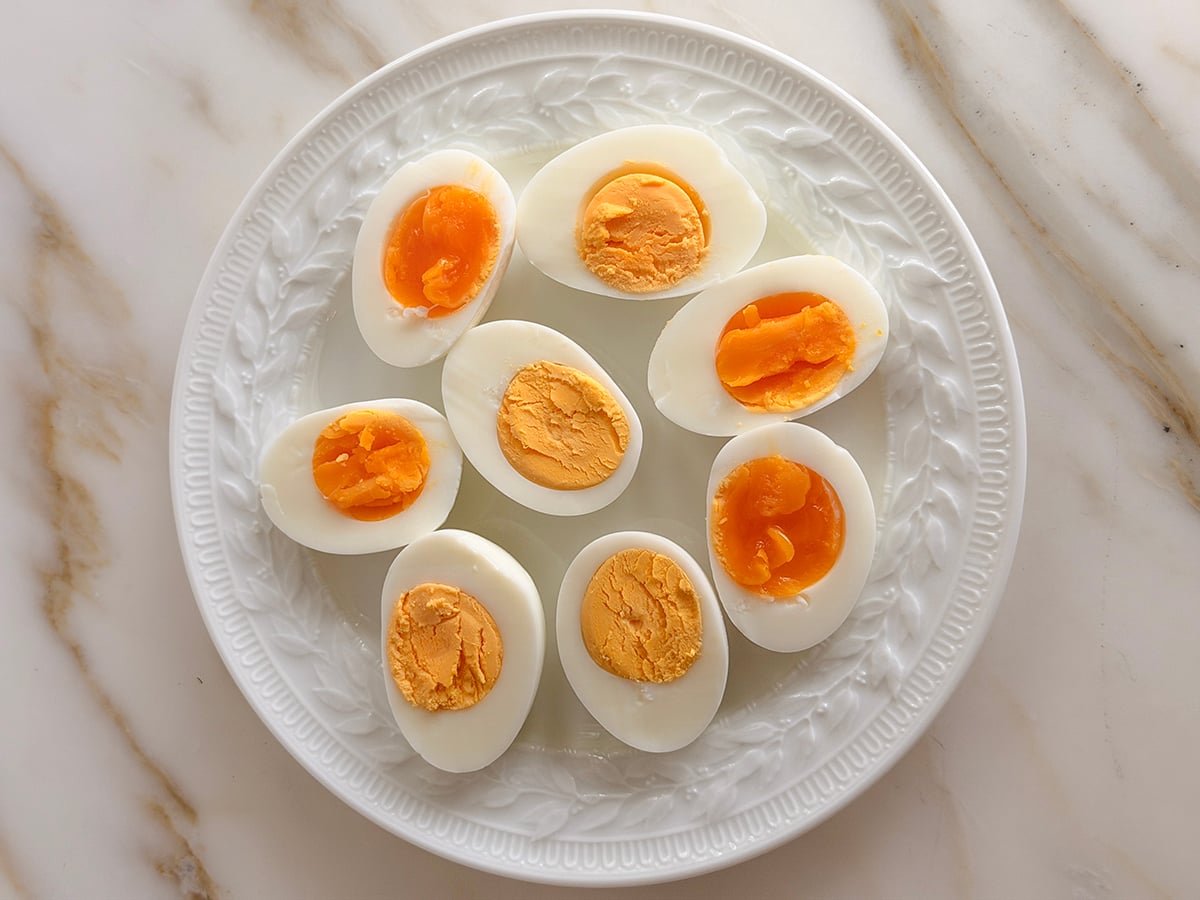
I’m like so many of you: boiled eggs are practically their own food group in our house! Dan’s breakfast would not be the same, or as fast and easy, without my stash of boiled eggs at the ready every morning. I’ve been boiling eggs for as long as I can remember, using them in recipes like deviled eggs or grabbing one for a quick snack that’s high in protein. Over time, I’ve perfected my method and developed a few tricks to achieve a good hard-boiled egg or jammy center with ease. The best part? This hot start method uses just one pot and a large bowl of ice water and delivers consistent results every time!
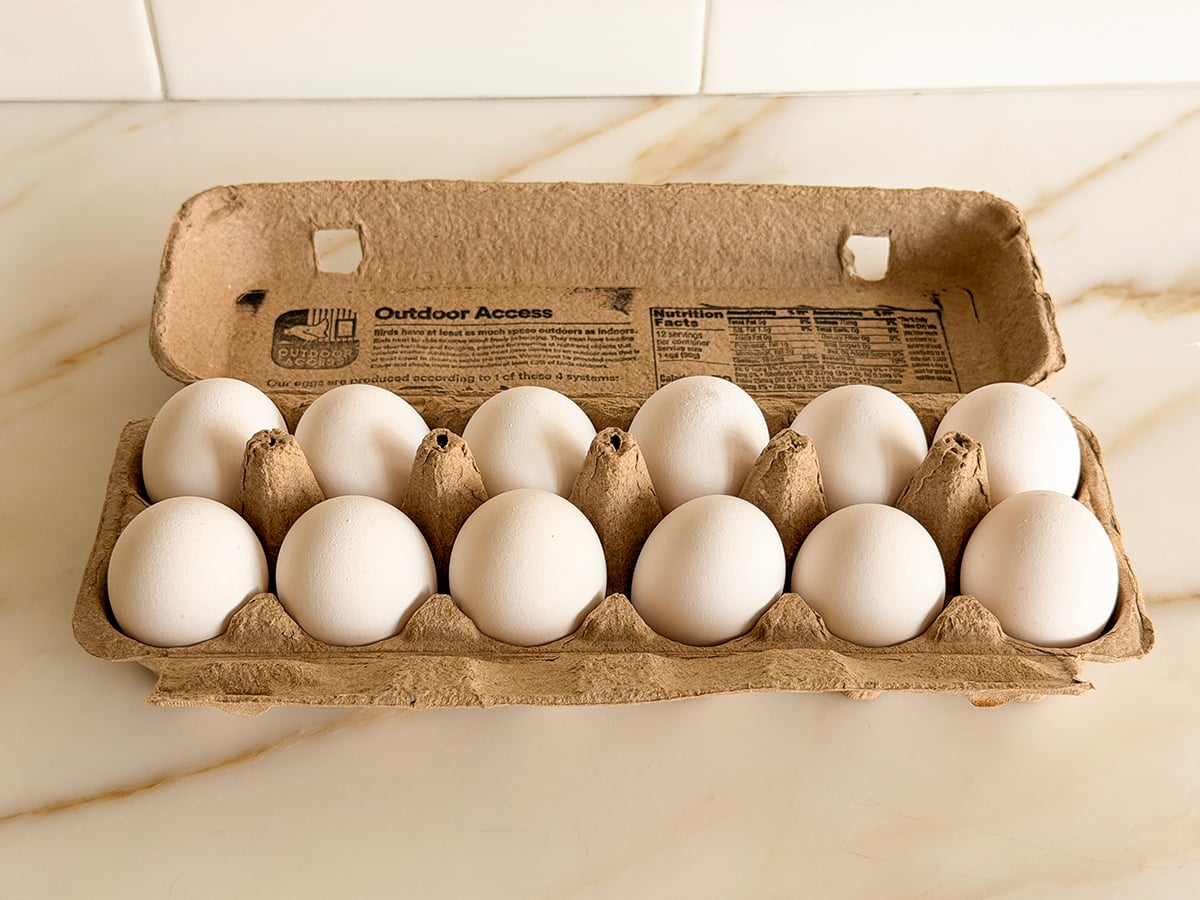
How to Boil Eggs
There are different ways to boil eggs, including a cold start, which requires starting them in cold water. My culinary school training focused plenty of time on eggs in general, and boiling them always started with cold water that was brought to a boil, then finishing with the heat off with the lid on. But peeling those?! Impossible. Once I changed to using a hot start, I never looked back for easier peeling and more consistent cooking.
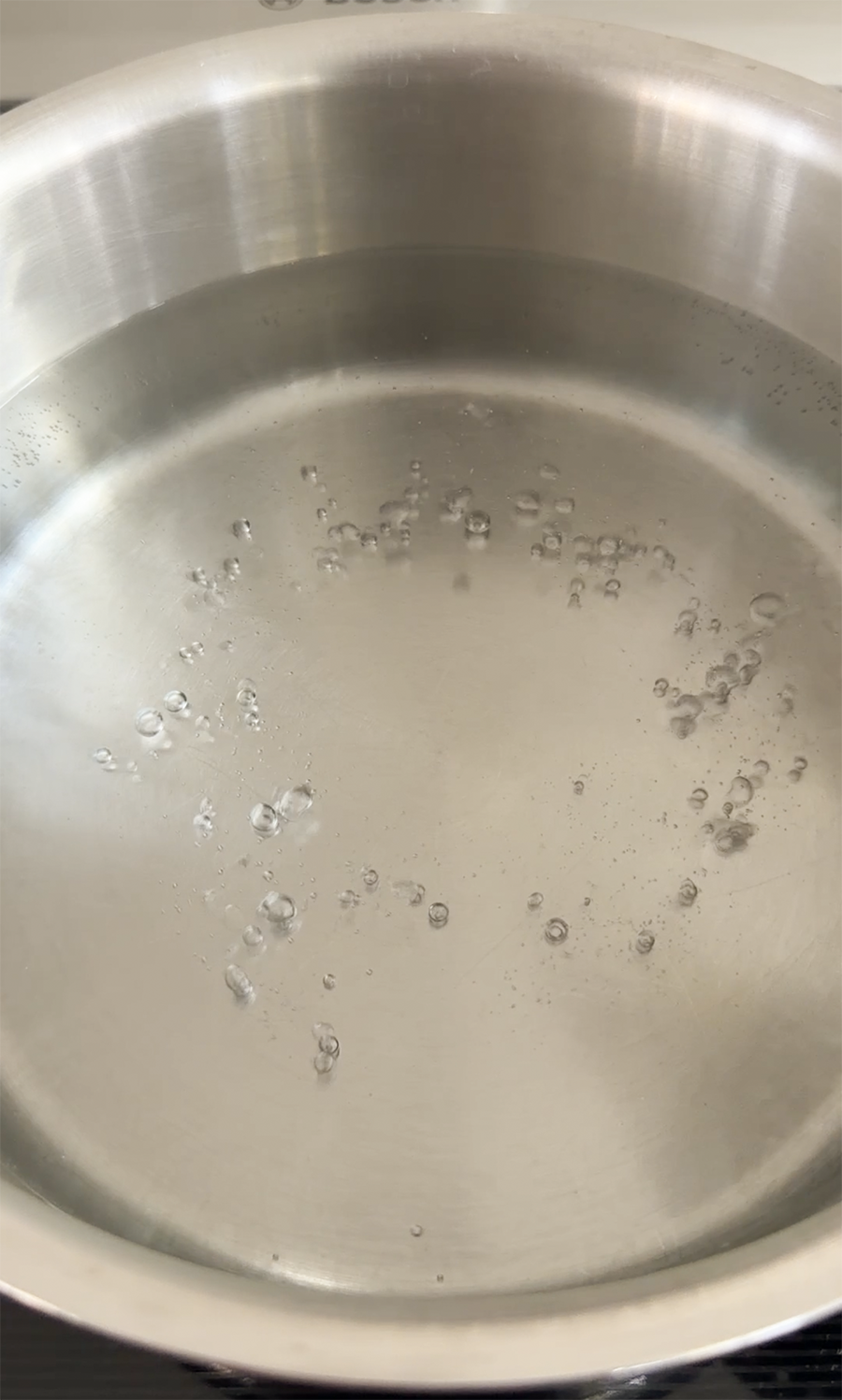
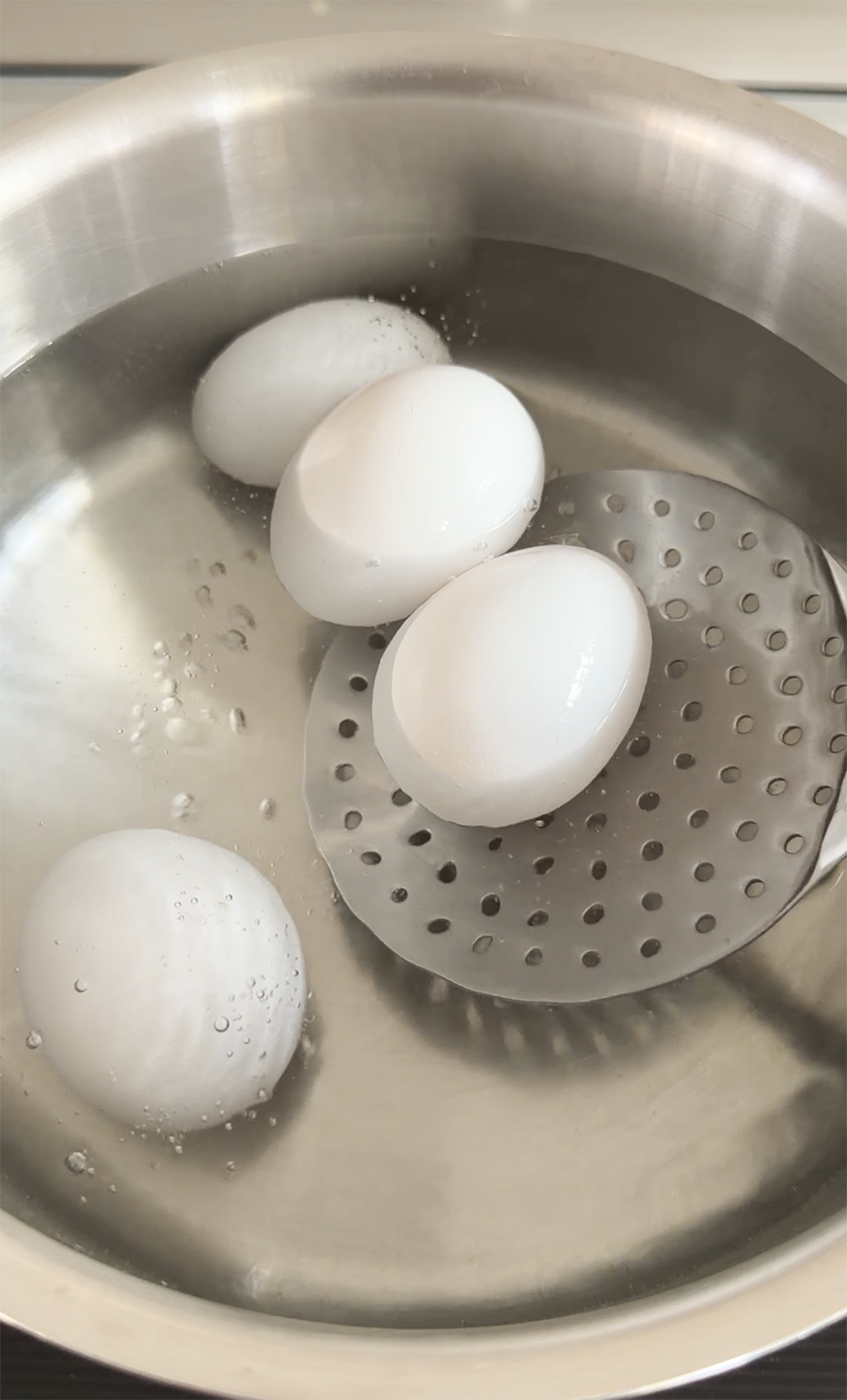
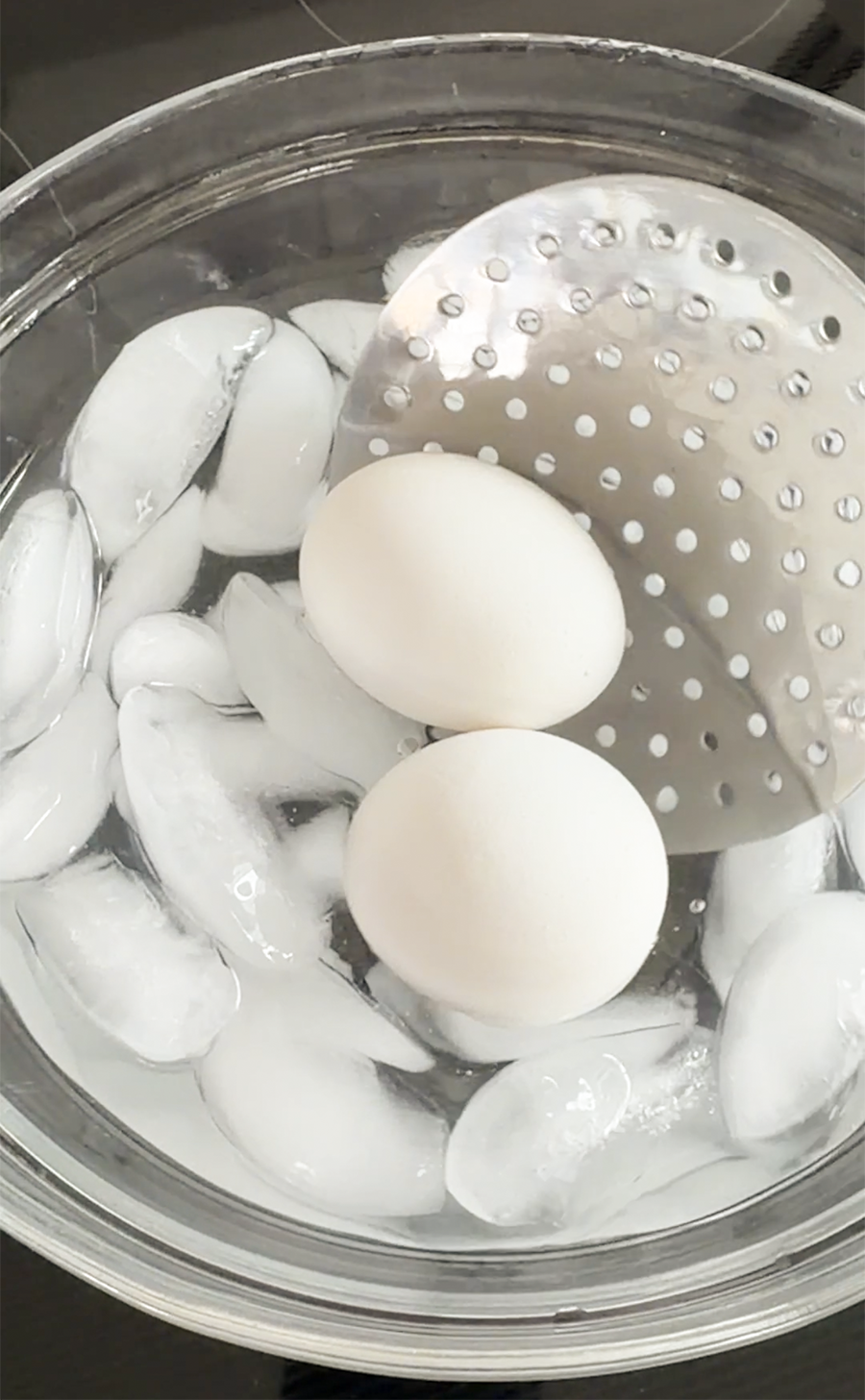

I use the same method for each type of boiled egg, simply adjusting the cooking time for my desired doneness.
- Bring a pot of water to a rolling boil over high heat. Use enough water to cover the eggs by about 1 inch of water.
- Lower the eggs into the hot water one by one using a slotted spoon, and reduce the heat slightly.
- Cook to your desired level of doneness.
- In the meantime, fill a medium bowl halfway with ice and cool water.
- Transfer the cooked eggs to the ice bath, and let them rest in the cold water.
- Crack the eggs on a hard surface, and peel under a cool running faucet for easy-peel eggs. Enjoy!
How Long to Boil Eggs
These cook times are for large eggs. Egg size affects the total time. So, add 30 seconds for extra-large eggs or 1 minute for jumbo eggs.
- Soft-boiled with runny yolks (jammy eggs): 6 minutes
- Medium-boiled: 8 minutes
- Hard-boiled with a slightly soft center: 10 minutes
- Hard-boiled with a light yolk: 12 minutes
- Hard-boiled: 14 minutes
Tip: Set a kitchen timer after lowering the eggs into the boiling water.
Pressure Cooker Method
You can also make perfect hard-cooked eggs in a pressure cooker:
- Add 1 cup of water and a trivet.
- Place eggs on the rack.
- Cook on high pressure for 5 minutes.
- Natural release for 5 minutes, then transfer the eggs to an ice bath.
This method produces a good, hard-boiled egg with tender whites and easy peeling. I don’t recommend using the pressure cooker for soft or medium boiled eggs, because timing the cook and release can be tricky.

My Tips for Perfectly Boiled Eggs
Because we’re lowering eggs into boiling water, you shouldn’t have any issues cracking, but a few tips never hurt!
- Use room-temperature eggs. Let cold eggs sit out at room temperature while the water boils. This prevents a drastic temperature change, which can sometimes lead to cracking.
- Don’t forget to reduce the heat. If the heat is still cranked up too high, it will jostle the eggs, causing them to bounce and bump into each other.
- Avoid overcrowding. Make sure your eggs have enough room to sit in the bottom of the pot in an even layer. Work in batches, if needed.
- Use older eggs. Fresh eggs are notoriously difficult to peel and often result in craters in the egg whites. Eggs that are 7-10 days old are ideal, because the air inside the cells in the shells expands, making them easier to peel.
- Cool immediately. The ice bath stops cooking and helps prevent the dreaded green ring around the yolk. The green ring is the biggest problem people encounter and happens when eggs are overcooked (or cooled too slowly, which is another way of overcooking). Note that if you are pressed for time and not worried about keeping the eggs to a particular level of doneness, you can skip the ice bath, leave them in the pot, pour off the hot water, and run cold water over the eggs for a few minutes instead.
How to Store Boiled Eggs
For the best results, I highly recommend storing boiled eggs in their shell. Hard-boiled eggs will stay fresh in an airtight container in the fridge for up to 1 week, medium-boiled eggs last for about 5 days, and soft-boiled eggs will keep for up to 3 days.
Ways to Use Boiled Eggs
I like to serve soft-boiled eggs and medium-boiled eggs with salted tahini avocado toast and a yogurt smoothie for breakfast. They’re also delicious over grain bowls, in falafel bowls, or soups, such as ramen.
Hard-boiled eggs are ideal to color for Easter eggs, to make deviled eggs and pickled eggs, or used in egg salads, potato salads, added to leafy salads, or even in sandwiches or wraps.

How to Boil Eggs
Ingredients
- 6 large eggs
- Water, enough to fill saucepan
- Ice, for ice bath
Instructions
- Fill a medium saucepan 3/4 full of water. Bring the water to boil.
- Use a large slotted spoon to lower the eggs, one by one, into the boiling water. Reduce the heat just a touch to prevent the eggs from knocking against each other.
- Cook for 12 minutes for hard-cooked. Reduce the cooking time by 2 minute increments for softer cooked results; cook for 6 minutes for a soft, runny center. Cook for 8 minutes for medium-cooked eggs.
- Fill a medium bowl halfway with ice and cool water. Remove the pot from the heat and with a slotted spoon transfer the eggs to the ice bath. Allow them to rest for 2 minutes.
- Crack the eggs on a hard surface and peel them under a cool running faucet. Slice and serve.
Notes
Nutrition
Nutrition information is automatically calculated, so should only be used as an approximation.
















I just hard boiled 4 chicken eggs and when I peeled them some of the white area was pink. what is this and is it safe to eat?
Hello–I have not encountered this before and what I have read suggests that the pink rings may indicate something is off. The fact that it happened on more than one is odd; sometimes there can be a blood spot but it would be highly unlikely in more than one egg. I would discard and get some new fresh eggs.
yikes mr toomey! i will NEVER eat another easter egg as long as i live…….how graphic and utterly horrifying……imagonnasticktochocolate eggs and bunnies. in my family eggs and bunnies represent new beginnings, new life, spring is here, the days are getting longer while the nights get shorter…….
Sorry but the Bible is rather graphic. But the story ends with hope.
Hi Maureen! Thanks for all your posts, i love reading them! I was so frustrated last weekend trying to make soft-boiled eggs! (Saturdays were basically hard-boiled, sundays runny and inedible). Do you have the perfect method for those as well?
Thanks!
Hi Laura! The approach is the same for soft-boiled eggs, just decreasing the cook time once the water comes to a boil, is turned off and the pot covered to cook. The time depends on the size of the eggs. For large eggs (rather than extra-large), a soft-boiled egg should take about 9 minutes. Try adding an extra egg to the batch and test it after 8 minutes to see if it’s cooked to the level of softness you like, then continue cooking for another minute if it’s too soft.
the last person to end up with the unbroken Red egg has good luck for the year,
Roger, thank you for this information–fascinating–I never knew.
I read in my first cookbook ever, that if you add salt to the cold water that is an inch over the eggs, boil for
12 minutes, purge immediately in cold water (as you said) — let cool on a metal rack – then peel.
Isn’t there a name for hitting the eggs? I am going to the Ladies’ Cedar Club Meeting tonight and will ask around.
Em
Hey Maureen,
My mother always said older eggs were the way to go. When I went to culinary school, I found out why. The older the egg gets, the larger the air pocket gets as the moisture is evaporating from the shell. Now…
I must say, that when I use organic eggs I NEVER have a problem, fresh ones too! This is also the time that I had changed my method of cooking them. So… I’m not certain witch came first; the EGG or the WAY I STARTED TO COOK THEM.
Method:
Cold large eggs (nothing but large in this fridge, since that is the correct size for baking).
Cover with an inch above of cold water.
Bring to a boil and cook (softly) 1.5 minutes (never a HARD rolling boil, it will make it a tough egg).
Shut off heat and cover for 5 minutes.
Scoop out each egg with a pasta scoop and let rest (they are continuing to cook) in a bowl.
When they are cool enough to handle, they are ready to peel, eat, store, color? 🙂
Always try to purchase organic eggs, my holistic doctor says its a must, you just don’t want to know what the others chickens were fed!
Bridget
BTW – Egg salad on a rice cake is awesome!
Number one is older eggs, but I’ve also found farm eggs work better than store bought eggs. I have no idea why this should be so. Also, I let them set for 10 minutes not 16. Maybe you have extra large eggs. After that….I still have difficultly getting them to perfectly peal.
But if you are just wanting to peal them for egg salad, etc. Put them on a cutting board on their side. Hold an end with one hand and take a table knife (not sharp, don’t want to cut fingers if you miss) and give them a quick (this is important, not slow) whack as close to center as possible. Then take the knife and run it around the shell of each half being careful to go between the small shards on the edge and the egg. If you hit it fast and hard enough there won’t be any shell in the egg. This is far faster than trying to remove a whole shell at a time.
Older eggs always peel easier than fresh eggs……………………….
We love Easter at our house and coloring eggs is a special treat for all of us…how do you celebrate at Easter?
Elizabeth
There is a tradition in which the Passion Story is told with colored eggs. The RED eggs are the symbol of the blood of Christ as he was on the cross. BLACK (or dark colored) eggs are when HE gave up the ghost and the earth went dark. When we see BROWN or WHITE eggs we remember that he was taken from the cross and wrapped in a linen shroud and placed in a tomb. Three days later the women walked in the YELLOW starlight to get to the tomb in the early morning. They arrived at the tomb just as the sun was rising and discovered that the ORANGE stone had been rolled away and it was empty. Just as the earth in the winter is dead, in the spring it turns GREEN that which was dead is now alive. Of course Jesus came to visit for a time but eventually He rose into heaven, the BLUE sky. But he said to wait and He would send another to be with the believers and at Pentecost the Spirit came in a flash of light (MULTICOLORED) to be with us. And he now rules as King with PURPLE robes.
As we look at an egg it looks pretty dead. But put it under a chicken and what looked like it was dead becomes a life. So the shell is a lot like the tomb. So we crack open the tomb. Each person takes an egg. One holds an egg end up and the other takes his egg and hits the held egg with the end of his. One egg will break. Then they change positions and hit good ends again. If one has both of his ends broken he loses the game. If both eggs have one end broken they try one more time until one egg has both ends broken. Some people say as they hit the eggs together “HE has risen”, the other person says “Indeed HE has risen”.
It’s just a fun way to tell the story and get all of the eggs broken.
Roger,
That also was the tradition in our household. We all looked forward to picking out our egg, and going around to each person and cracking egg ends…
I always wondered if anyone else did this, or was it something my Dad made up. Now I know….Happy Easter.
Jan Kalush Moore