
This post may contain affiliate links. Please read our disclosure policy.
This maître d’ butter is a rich, herbaceous compound butter that adds the perfect finishing touch to grilled meats and veggies. Made with a handful of ingredients and simple steps, it’s a staple in my recipe arsenal, transforming even the simplest meals into restaurant-worthy feasts thanks to the incredible flavor you just don’t get with regular butter.
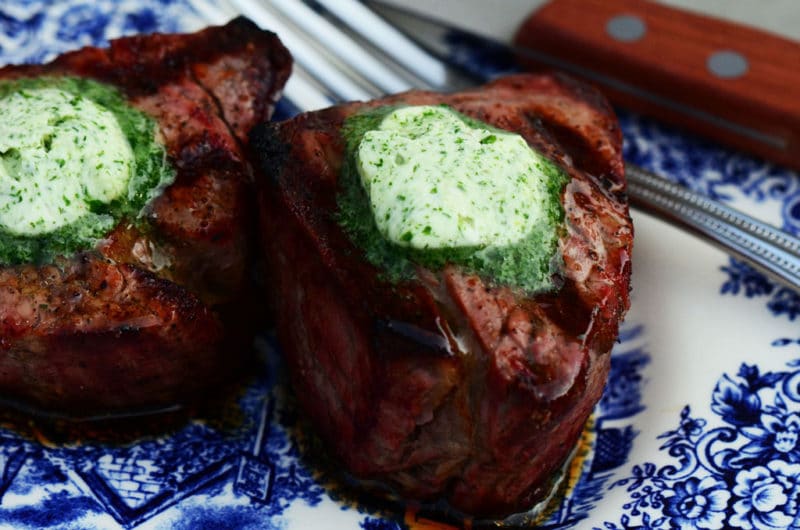
What is Maître D’ Butter?
Also known as maître d’hôtel butter or hotel butter, maître d’ butter is a type of butter. It is specifically a savory compound butter that is incredibly delicious. Make it with softened butter, an acid such as lemon juice or lemon zest, and fresh herbs. It is the most common compound butter you’ll find in French bistros. Find it typically atop beef, fish, chicken, pork, or vegetables. It’s a finishing touch that adds savory flavors in the best way. I often enjoy using it as a finishing element with sauces and soups, too!
Compound butter is one of the good things that sounds far more complicated than it actually is. At its core, it’s simply softened butter mixed with additional ingredients. Those include aromatics, herbs, citrus, or even sweet add-ins, and then shaped into a log for slicing. The most important thing? Start with a good, high-quality stick of butter that’s been brought all the way to room temperature.
This compound butter recipe was inspired by steak frites from a family favorite restaurant, Mon Ami Gabi, a French bistro in Lincoln Park. The first time I tasted it there, I couldn’t stop thinking about the incredible flavor, and I learned that the secret was the compound butter on top. I can’t even count the number of times we have visited “Mon Ami” for a special evening in Chicago. My parents loved the restaurant, and for years my sister and I have gone back to savor it.
I haven’t lived in Chicago for years, and I’ve often wanted that steak! So, drawing from my experience making homemade butter and brown butter, I got to work in my kitchen, recreating that incredible topping. Luckily, it turned out to be a simple process and is now my favorite addition to savory dishes like filet mignon, crab legs, and grilled vegetables. Any meal feels more special when this butter appears on the table.
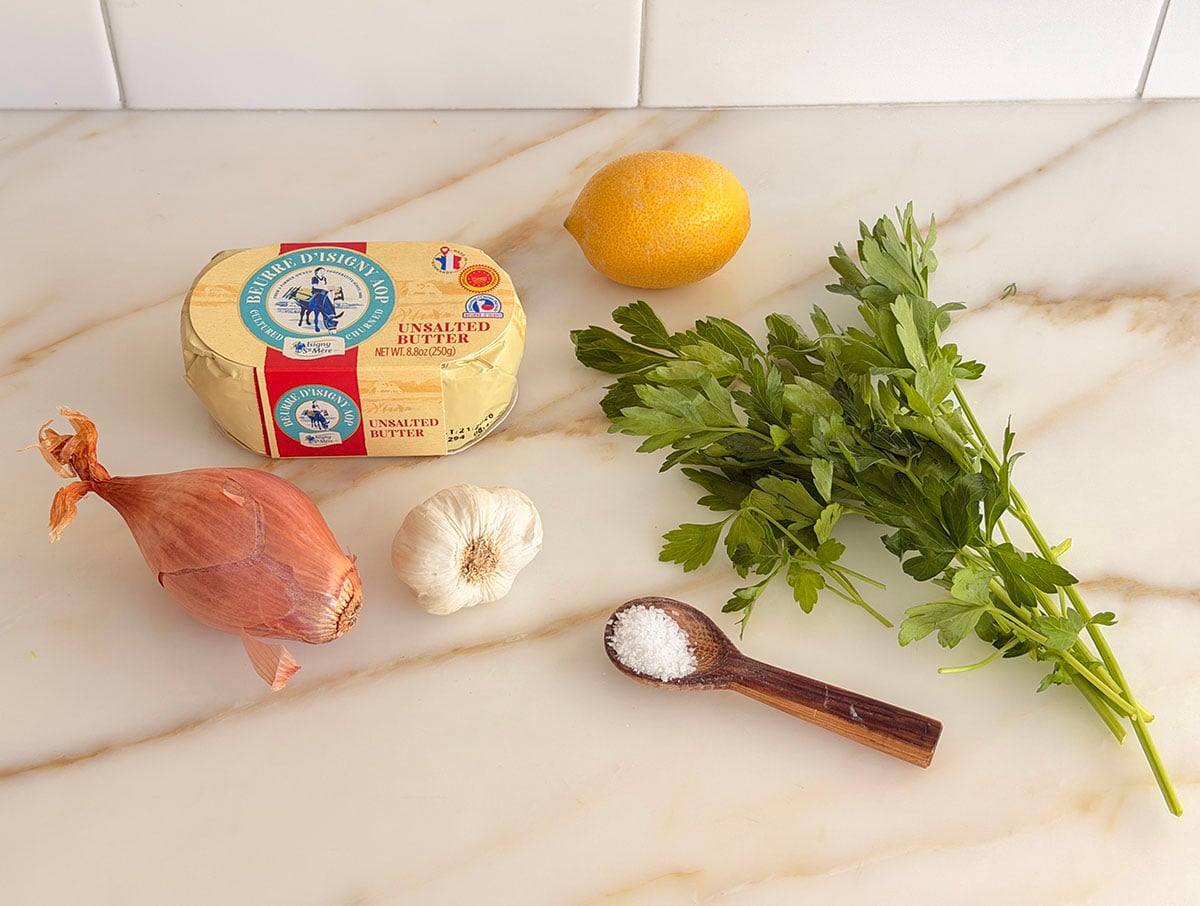
Ingredients and Notes
These are just a few notes about the key components. Please be sure to scroll down to the recipe card for the complete details!
- Parsley – Italian flat-leaf parsley is most commonly used for maître d’ butter, but curly parsley will also work if that’s all you can find. Follow my guide for how to chop parsley to ensure you get little green flecks scattered evenly throughout the butter.
- Shallot – I love the pungent, sweet, savory taste this little onion adds, giving the butter incredible depth.
- Garlic – grate or mince, this is a flavor maker I enjoy very much here. It’s also optional if you prefer less raw garlic flavor.
- Lemon Juice – The acidity cuts through some of the heaviness of the fat, providing a pop of brightness that creates a well-rounded taste.
- Unsalted Butter – I prefer to use unsalted butter so I can control the amount of salt in the final butter. For the best results, make sure to use a high-quality butter with a rich flavor and deep yellow color, such as European-style butter. Let it come to room temperature for easy mixing.
- Salt – I recommend using fine salt as it distributes more evenly throughout the butter, but kosher salt will also work.
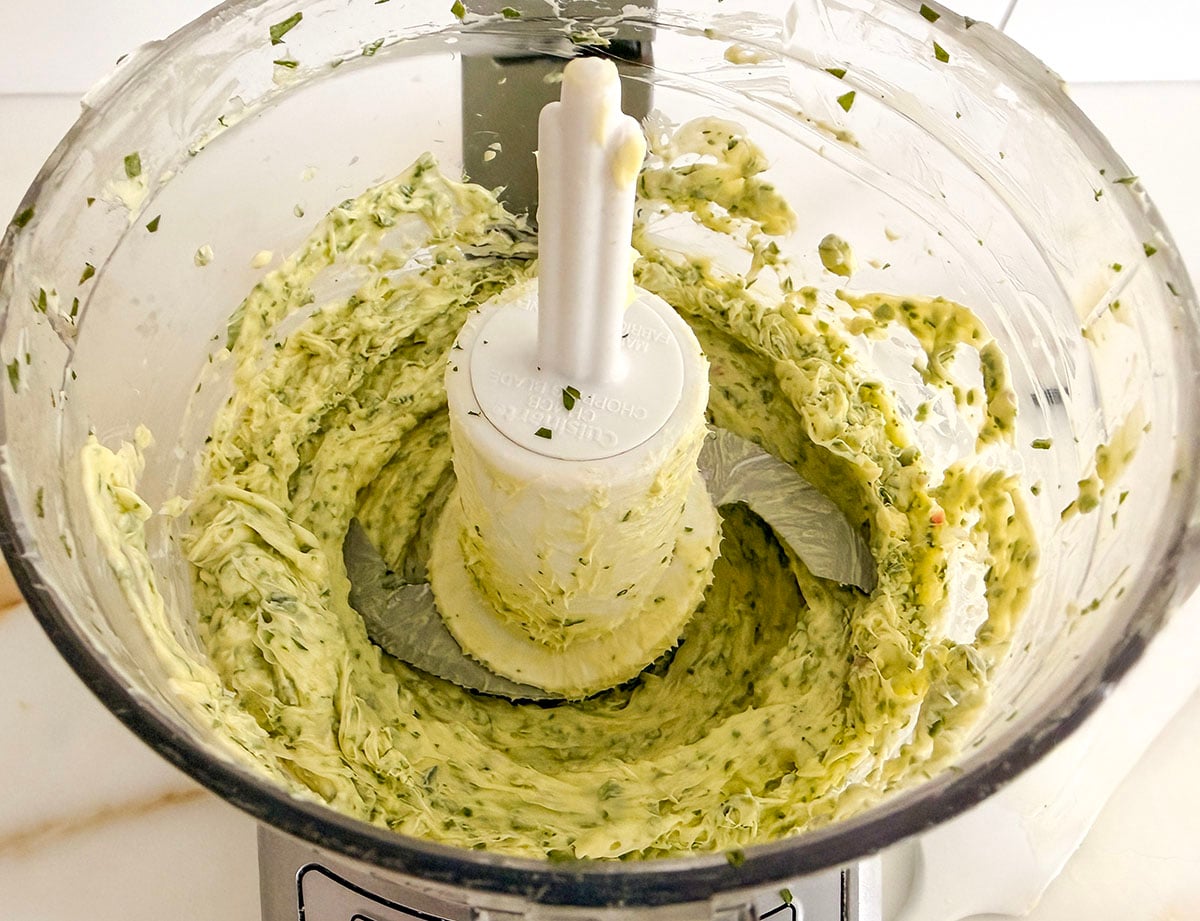
How to Make Compound Butter
There are a few different ways to mix compound butter, and none of them require any special skill.
By hand in a small bowl – This is the easiest way. Simply place your softened butter in a small bowl and use a fork or spatula to mash and mix in your additional ingredients. This works especially well for small batches.
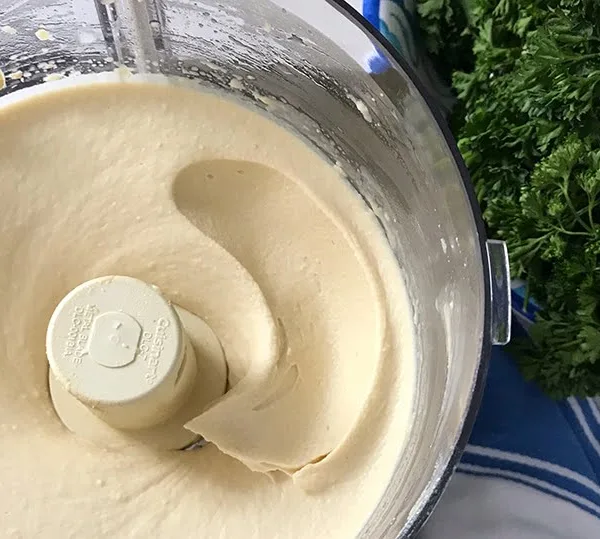
With a hand mixer – If you want an ultra-smooth, whipped result, beat the softened butter with a hand mixer before mixing in your herbs. This incorporates more air and gives you a lighter, fluffier texture.
With a stand mixer – For larger batches (think a full cup of butter or more), use the paddle attachment of your stand mixer to cream the butter before adding in your herbs, lemon juice, and aromatics. This is the most efficient method when you’re making a big batch to freeze–an approach I highly recommend!.
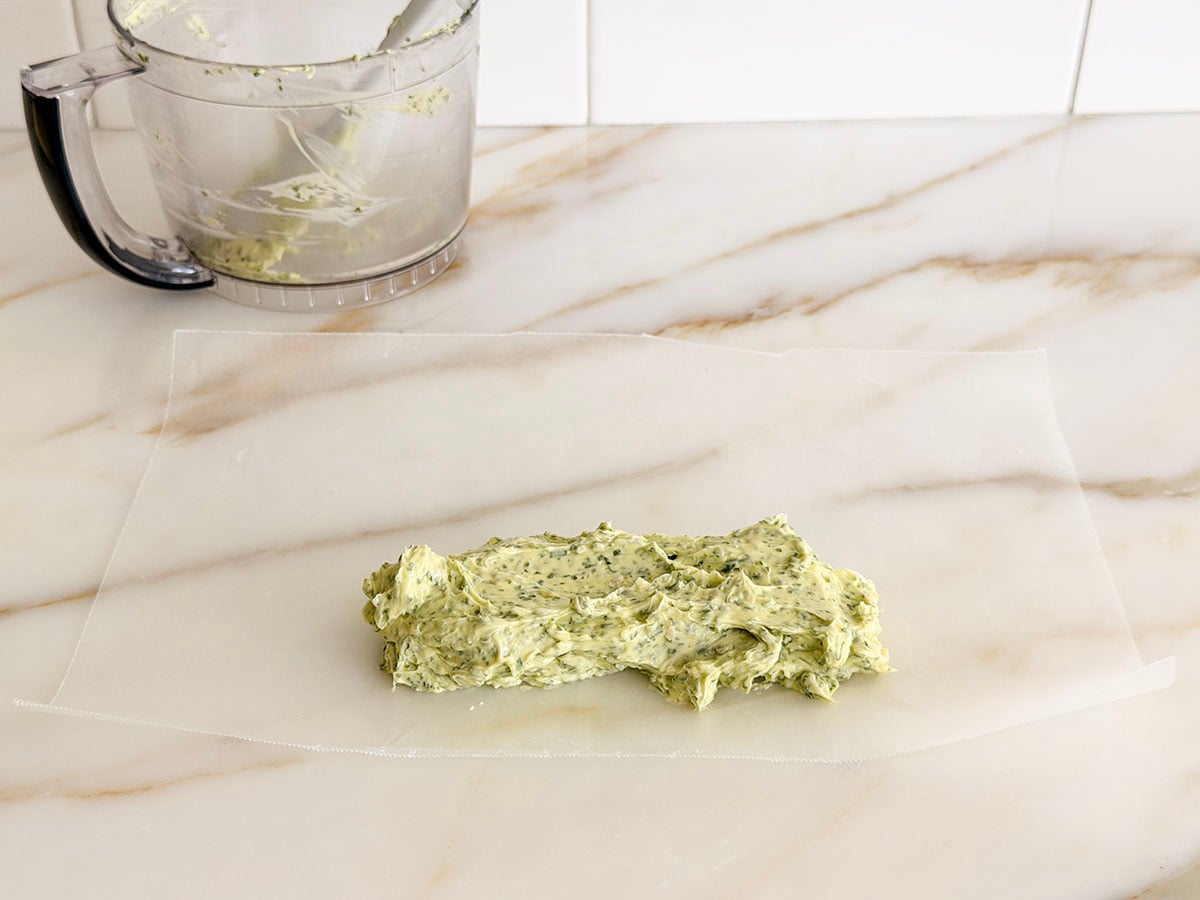
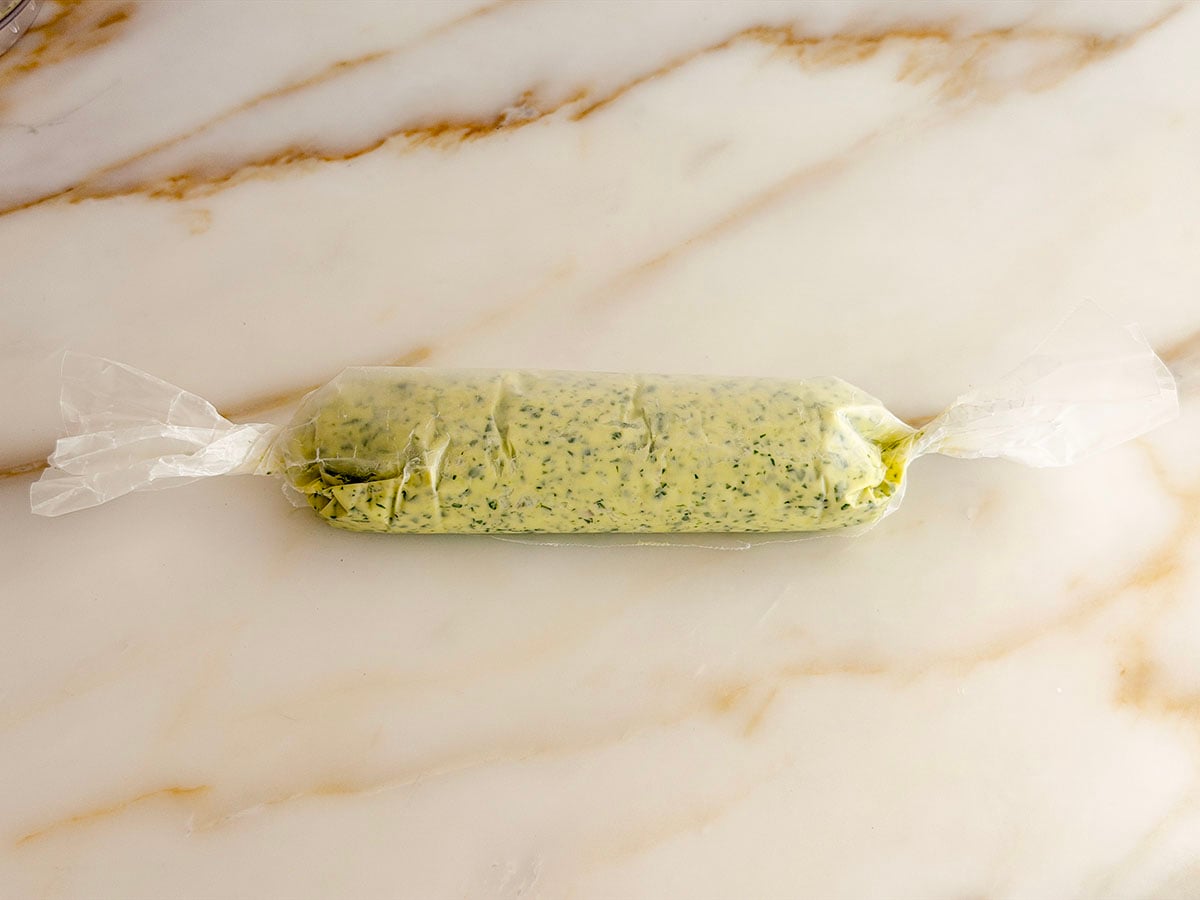
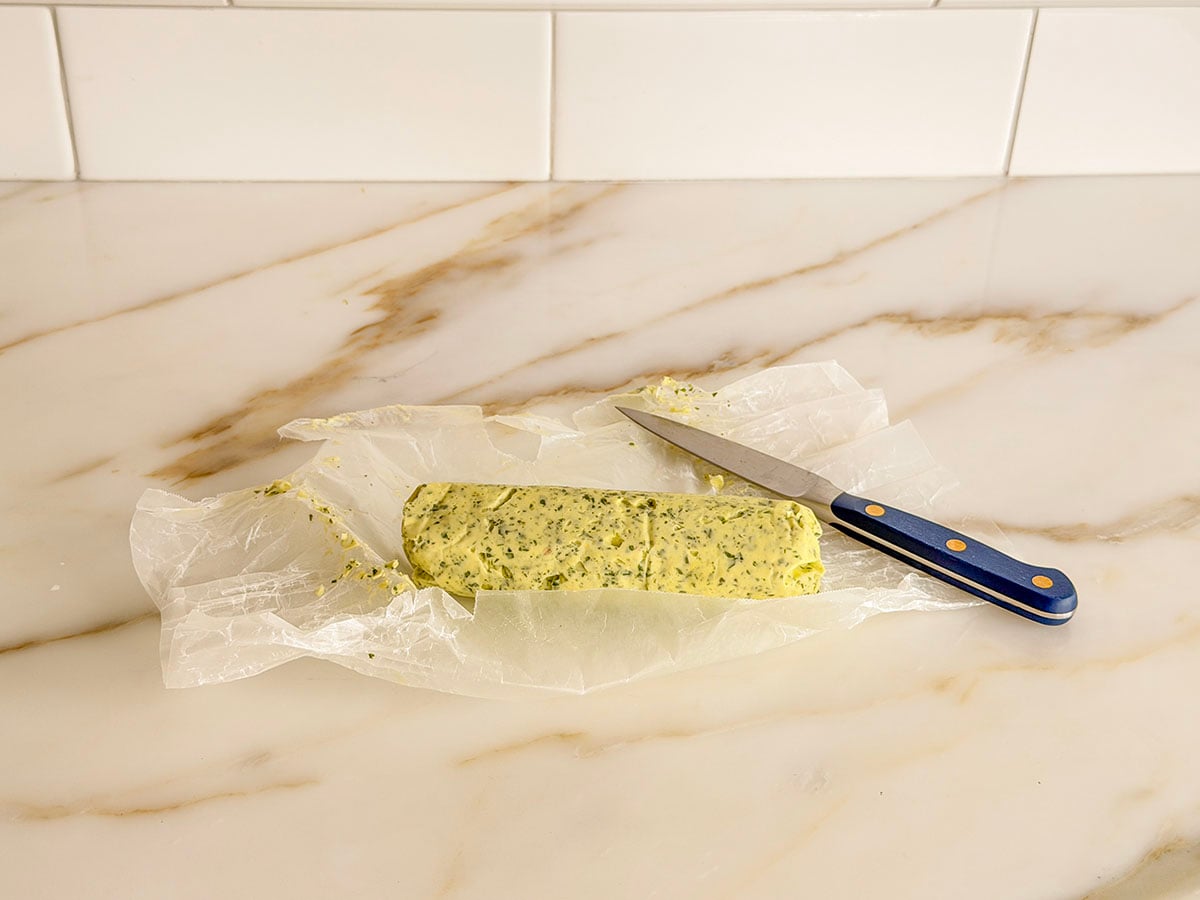
Once your butter is mixed, transfer it to a piece of parchment paper or plastic wrap. Spoon the butter in a line, then fold the parchment paper over it and roll it into a tight log shape. Twist the ends of the log closed (similar to a candy wrapper) and refrigerate or freeze until firm.
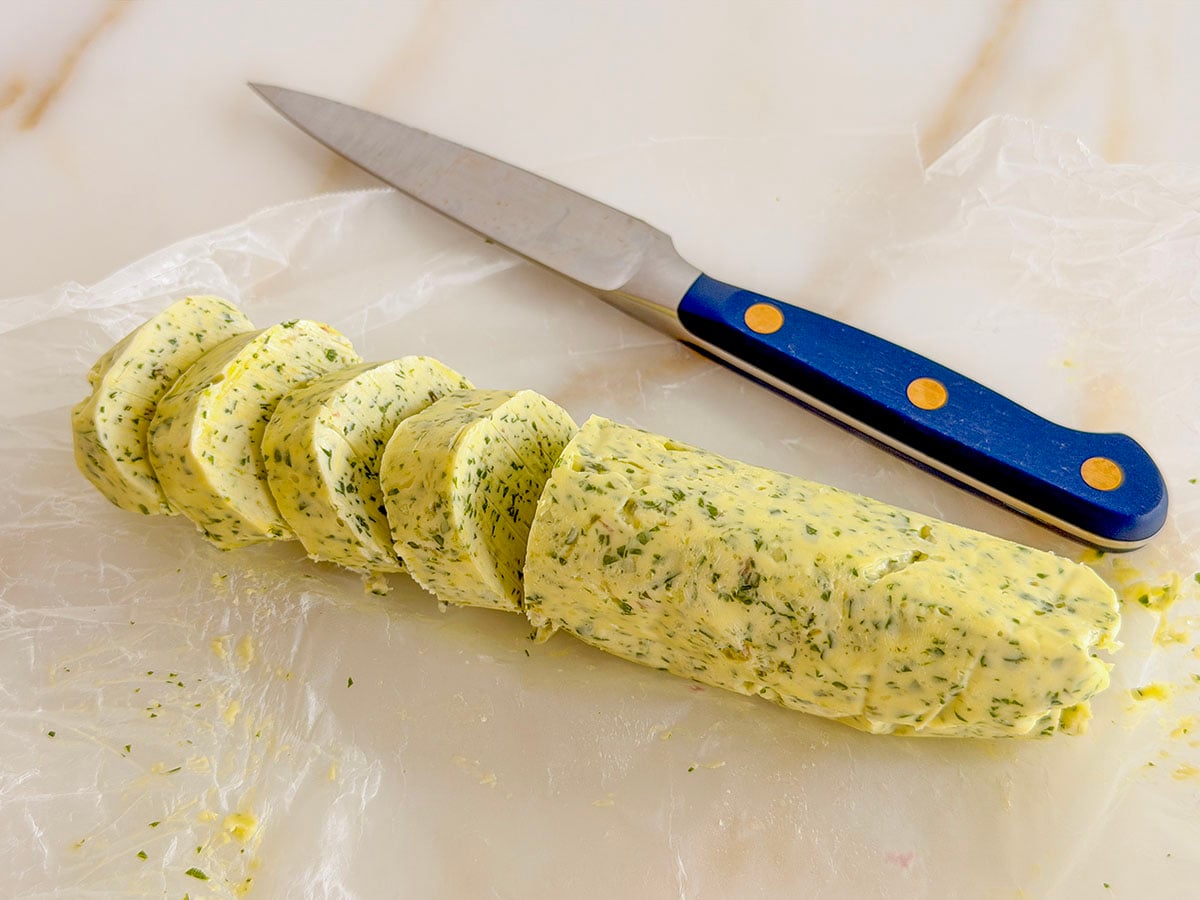
To serve, simply cut individual portions of cold butter off the log. Quarter-inch slices are ideal. Place them over hot food so they melt right on contact.
Compound Butter Variations
Once you’ve mastered this herb compound butter recipe, there are so many different ways to customize it. Here’s a look at a few of my favorite variations:
- Garlic-Herb Butter – The most beloved savory butter after maître d’, garlic butter (or garlic-herb butter) is the companion for bread, pasta, and roasted chicken. Add a few cloves of roasted or minced garlic to your softened butter, along with fresh herbs like thyme or chives.
- Chive Butter – A simple, elegant option, chive butter is made with softened butter, finely chopped chives, a bit of lemon zest, and salt. It melts beautifully over a perfect steak or a baked potato.
- Sweet Compound Butters – Compound butter doesn’t have to be savory! Sweet butters like honey butter, cinnamon butter, or maple butter are made the same easy way, just with sweet add-ins instead of herbs and acids. These are wonderful spread over warm bread, pancakes, or waffles.

My Favorite Ways to Use
There are endless ways to use this maître d’ butter recipe. So, feel free to get creative in your kitchen! Some of my favorite options include:
- Steak – This is the classic! Add a slice of maître d’ butter to hot steak just before serving, and let it melt into the meat for an instant, restaurant-quality finish. It’s especially delicious with filet mignon, ribeye, or New York strip.
- Chicken – Spoon the butter over grilled, pan-seared chicken breasts or thighs, or spatchcock chicken. It melts into the meat, adding richness and bright, herby flavor without any extra effort.
- Fish – A small pat of maître d’ butter is perfect for delicate fish like salmon, cod, or halibut. It enhances the natural flavor while adding a silky, citrusy finish.
- Vegetables – Toss roasted or steamed vegetables, like asparagus, green beans, corn, carrots, or broccoli, with a pat of butter to elevate even the simplest side.
- Potatoes – Melt the compound butter over baked potatoes, olive oil mashed potatoes, or crispy roasted new potatoes. It’s a simple swap that makes a big difference in flavor.
- Bread – Spread it over warm, crusty bread or dinner rolls for an easy, flavorful side that feels a little extra special.
- Pasta and Grains – Stir a small amount into warm pasta, rice, or quinoa for a quick boost of richness and depth.
- Eggs – Add a little to scrambled eggs or melt it over a fried egg for a simple breakfast upgrade with tons of flavor.
- Soups and Sauces – Finish soups, pan sauces, or gravies with a small pat of maître d’ butter to add richness and a fresh, herbaceous note right at the end.
How to Store and Freeze
Maître d’ butter stores and freezes well. So, I like to prepare a large batch at once to keep on hand. To keep it fresh, transfer leftover butter to an airtight container or wrap it tightly with plastic wrap.
It will stay fresh in the fridge for up to one week or in the freezer for up to 6 months. Thaw frozen butter in the fridge, and it will taste as good as new!

Herb Compound Butter Recipe
Equipment
Ingredients
- 1/3 cup parsley, chopped
- 1 teaspoon shallot, finely chopped
- 1 clove garlic, minced or grated
- 1 1/2 tablespoon lemon juice
- 8 tablespoons unsalted butter, softened
- 1/2 teaspoon kosher salt, plus more as needed, to taste
Instructions
- In a small food processor, pulse the parsley, shallots, garlic, and lemon juice until finely chopped. Add the butter and puree, stopping and scraping down the bowl of the processor as you go. Season to taste with salt.
- On a piece of plastic wrap, spoon the butter into a log-like line about 1 ½ inches wide. Fold the plastic wrap over the butter and roll the butter up, forming a log shape. Refrigerate or freeze until solid.
- To serve, let butter soften slightly. Place 1/4-inch slices of the butter on hot grilled meats, fish, or vegetables.
Notes
Nutrition
Nutrition information is automatically calculated, so should only be used as an approximation.
















Loved this essay…. It made me ramble through my own nostalgic meals and I enjoyed the journey.