This post may contain affiliate links. Please read our disclosure policy.
Learn how to make lemon curd with six simple ingredients for a bright citrus flavor and silky texture that’s perfect for a lemon meringue tart, thumbprint cookies, or lemon cake. This easy lemon curd recipe creates a creamy spread that’s far better than store-bought and is surprisingly simple to prepare at home.
What is Lemon Curd?
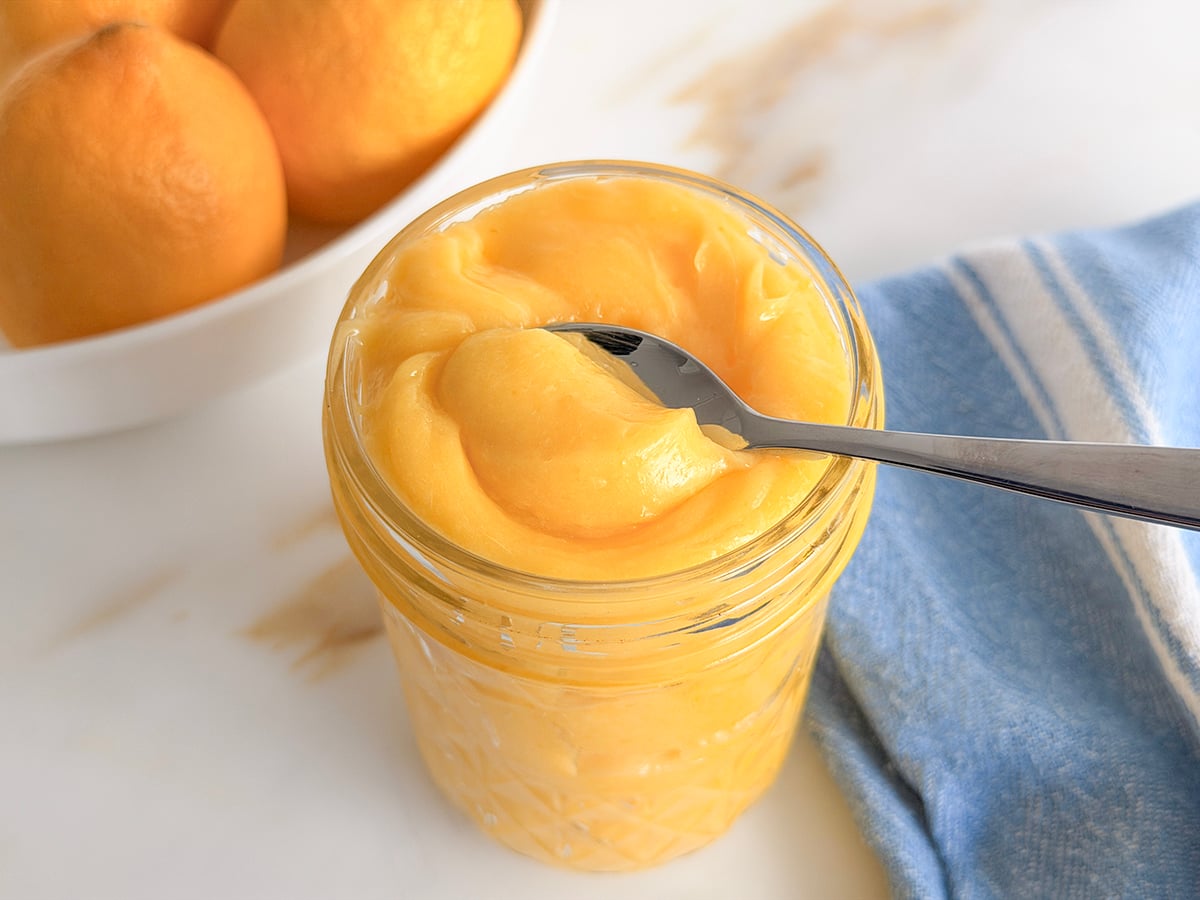
Lemon curd is a type of thick spread that is used in desserts or similarly to jam, smoothed over toast or breakfast options, like pancakes! It’s cooked gently until it thickens enough to coat the back of a spoon, creating a glossy finish and luxuriously creamy texture.
It’s smooth, buttery, and bursting with bright citrus flavor. Traditionally used in tarts and pastries, lemon curd can also be spooned over toast or biscuits, much like jam. It also makes a wonderful topping or filling for cakes.
While lemon curd can be found at most grocery stores, making it at home is not difficult and ensures the best flavor and texture. You control the amount of butter, the sweetness, and the intensity of the citrus (I like mine very tart!). The result is a great lemon curd recipe that tastes fresh, vibrant, and balanced.
I’ll walk you through this tried-and-true method step-by-step so you can master one of the most versatile yet simple recipes to keep on hand.

Key Ingredients
Please be sure to scroll down to the recipe card for the complete details!
- Sugar – Use granulated sugar (white sugar) to sweeten the curd and balance some of the tart lemon flavor. Brown sugar or other sugar substitutes will alter the taste, color, and texture, so it’s best to stick with white. Cane sugar will work well.
- Fresh Lemons – I use both fresh lemon zest and tablespoons of lemon juice for maximum flavor. Meyer lemon works well for a slightly softer, floral note, but I prefer regular lemons for their tartness. Always avoid zesting the white pith, which can make your curd taste bitter!
- Whole Eggs – Separate the egg yolks and whites, and use just egg yolks to add richness and help thicken the curd. Save your egg whites in the refrigerator and use them for all kinds of recipes such as meringue (or my nougat with pistachios!).
- Salt – Just a pinch of salt helps balance the sweetness and enhance the rest of the flavors.
- Butter – This helps thicken the curd and gives it a rich, creamy flavor. I always use unsalted butter and highly recommend keeping it nice and cold for the best texture.
Can I Use Other Citrus?
Yes! You can easily adapt this into orange curd or lime curd by substituting the zest and juice. Adjust the sweetness depending on the fruit’s acidity. Grapefruit also works, though you may need slightly more sugar to balance its bitterness.
How to Make Lemon Curd
Once you begin, this recipe comes together quickly. So, I always make sure to have all my ingredients ready to go and situated nearby.
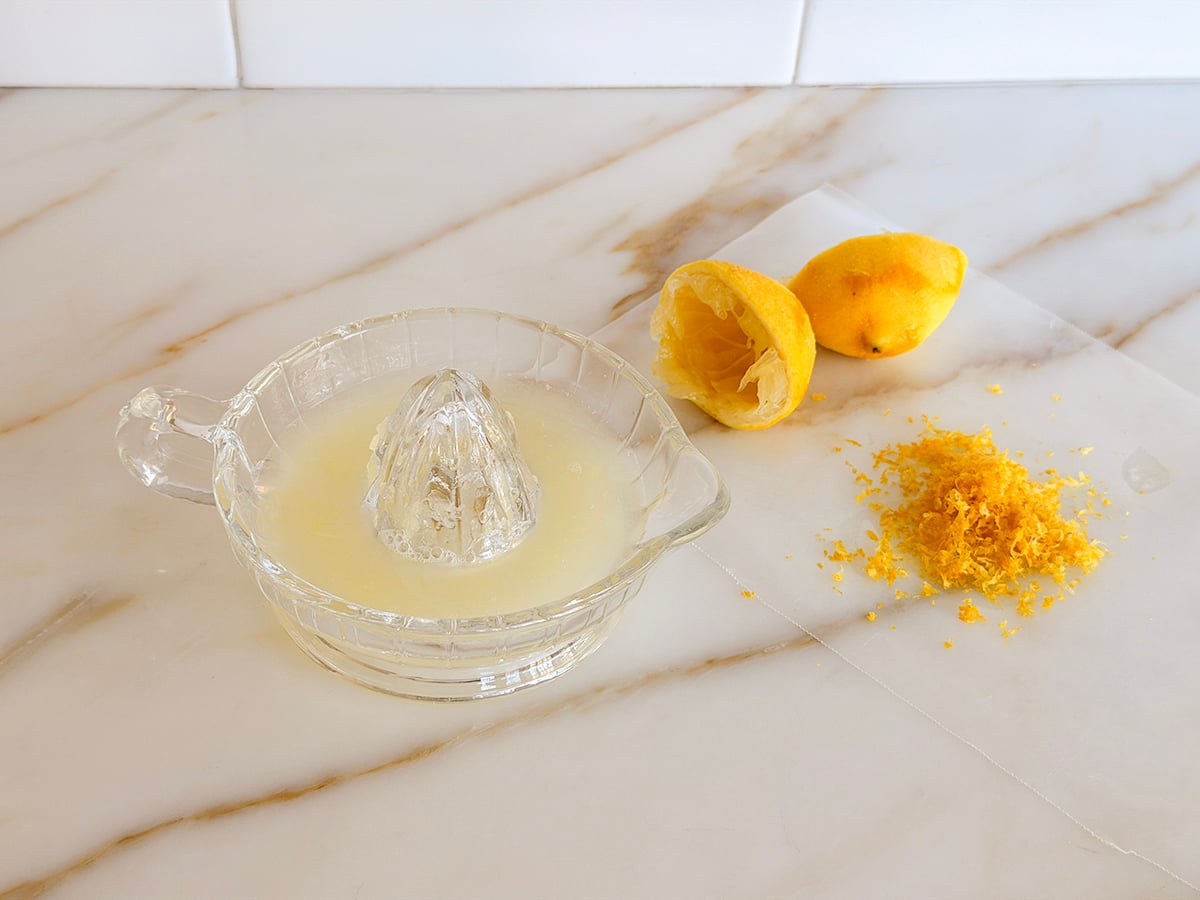
- Make lemon sugar. Mix the sugar and lemon zest in a small bowl. I like to use my fingers to rub the mixture until it’s damp and fragrant. This simple step helps release the flavorful oils, infusing the sugar with a bolder lemon taste. Plus, it’s fun and aromatic to do!
- Combine. Heat water in a double boiler or a heavy pot with a heatproof bowl that fits over the top, bringing the liquid to a boil. Then, reduce the heat, and keep the water at a simmer over medium-low heat. Whisk all the ingredients except the butter in the top bowl until it thickens.
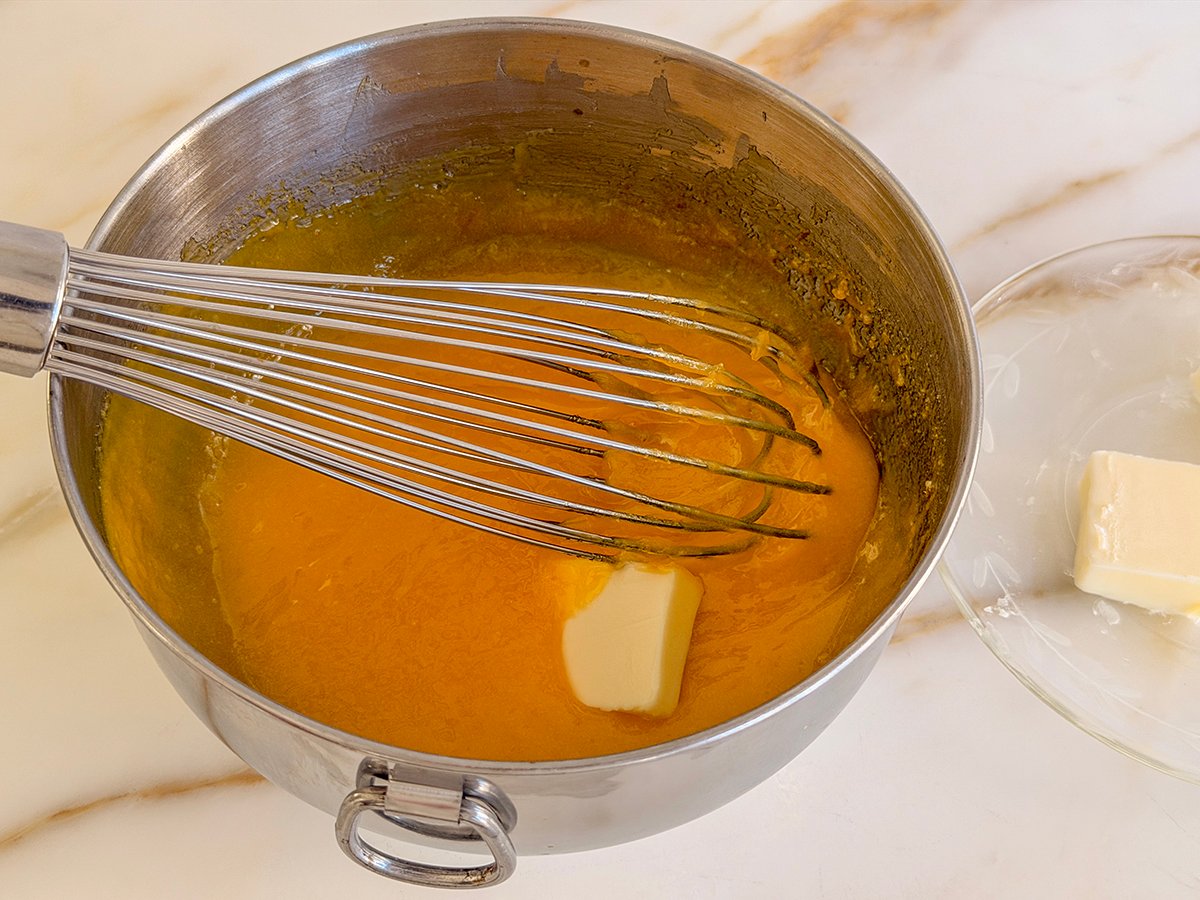
- Add butter. Remove the pot from the heat, and add the cold butter one tablespoon at a time, whisking in between each addition. This slow-add of the butter is key to creating a luscious, creamy consistency.
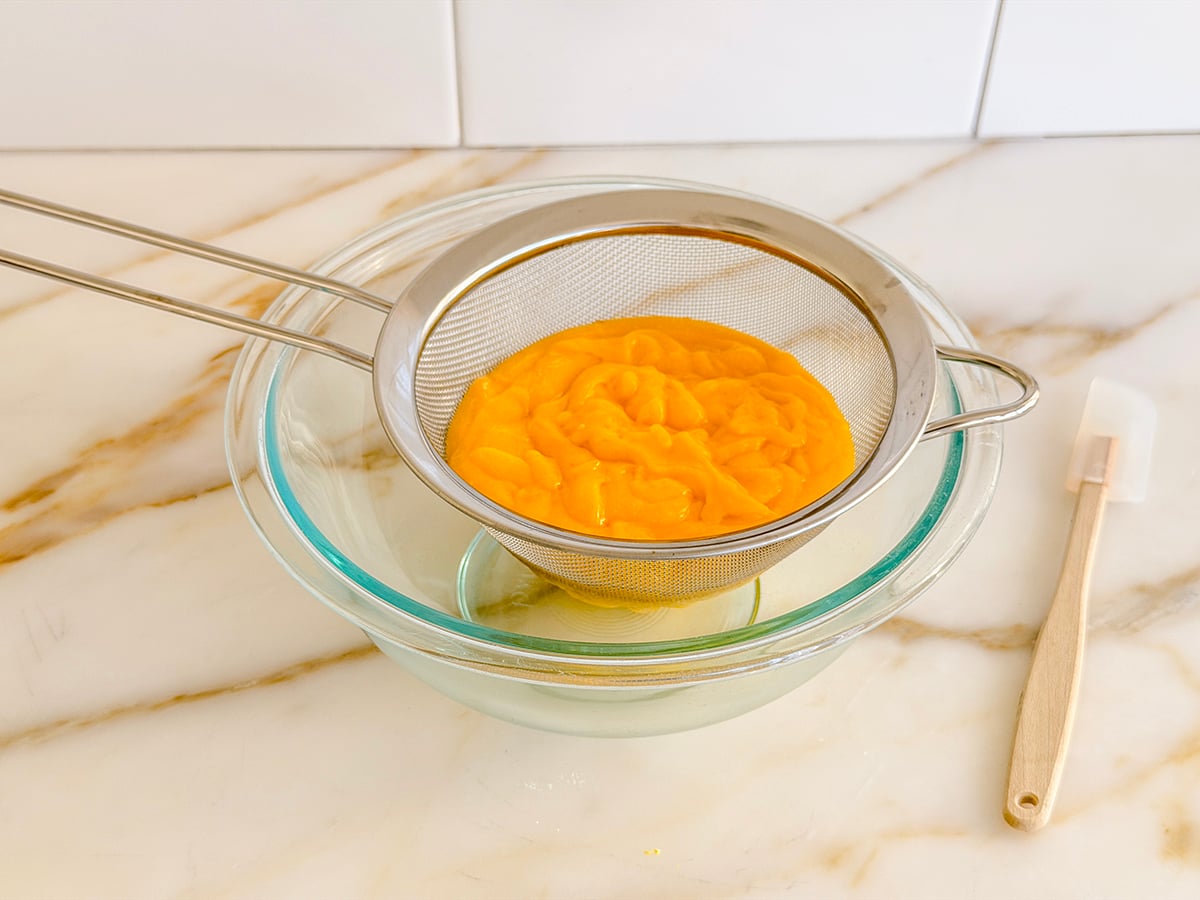
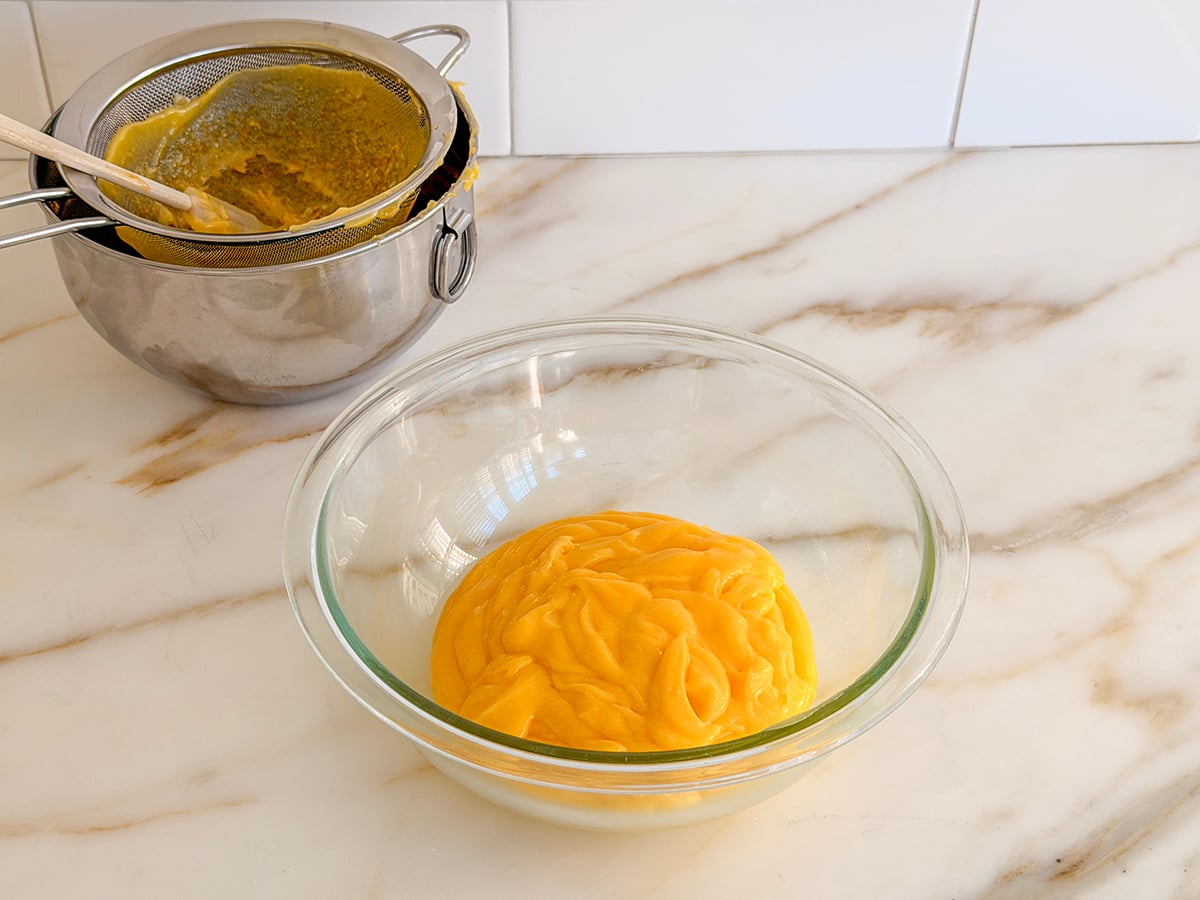
- Strain. Pour the curd through a fine mesh sieve to smooth the curd and give it a velvety texture.
- Chill. Place a piece of plastic wrap directly on the surface of the lemon curd, and transfer it to the fridge to chill and set.
Ways to Use Homemade Lemon Curd

The uses for lemon curd are truly endless! Honestly, it’s so good that I could eat it with just a spoon (and often do enjoy dipping in for a little pick-me-up!). However, if you’re looking for inspiration, some of my favorite ways to put it to use include:
- Spread on regular or raspberry scones, toast, or biscuits
- As a filling for tart shells
- Layer in cakes or as a cake filling
- Swirl into homemade yogurt or labneh
- Enjoy as a topping with vanilla ice cream
- As a topping for pavlova or meringues
- As a filling for crepes or thumbprint cookies
- Layer in a lemon parfait with whipped cream and crushed cookies
- Spoon over pancakes or waffles
- Fold into whipped cream
- Spoon into small jars and wrap with ribbon for a homemade gift (just be sure your recipient knows this is refrigerator curd, not canned for room temperature shelf life!)

Homemade Lemon Curd
Ingredients
- ¾ cup granulated sugar
- 2 tablespoons lemon zest, from 2 lemons
- 6 large egg yolks
- ½ cup fresh lemon juice, from 2 lemons
- 1/8 teaspoon salt
- 8 tablespoons unsalted butter, softened
Instructions
- In a small bowl, mix the sugar and lemon zest. Rub with your fingers until damp and fragrant.
- In a double boiler or a heavy pot with heatproof bowl that fits over top, heat 2 inches of water and bring to a boil. Reduce the heat to low and keep the water at a simmer.
- In the bowl of the double boiler, whisk to combine the egg yolks, lemon sugar, lemon juice, and salt. Whisk constantly to cook from the steam heat from below until the mixture thickens and reaches 170°F.
- Remove from the heat and add the butter, one tablespoon at a time, whisking after each addition until combined.
- Place a fine mesh sieve over a bowl and pour the curd through the sieve, using a soft spatula to push the curd through. Scrape any curd that clings to the bottom of the sieve into the bowl as well.
- Place a piece of plastic wrap directly on the surface of the curd and chill until cold.
Notes
Nutrition
Nutrition information is automatically calculated, so should only be used as an approximation.
FAQs
A metallic taste usually comes from a reaction between the lemon juice and certain cookware, such as aluminum pans or uncoated cast-iron. To prevent this, avoid aluminum bowls or utensils, use a stainless steel, heavy-bottomed saucepan or double boiler, and cook gently to prevent overcooking.
Lemon curd thickens when the egg yolks reach about 170°F. If it’s too thin, a few things may be happening: It hasn’t cooked long enough. Keep whisking gently over simmering water until it visibly thickens and coats the back of a spoon.
– The heat is too low. The water underneath should be at a steady simmer.
– The ratio is off. Too much juice or not enough yolk can prevent proper thickening.
Remember: lemon curd continues to thicken as it chills. If it seems slightly loose while warm, refrigerate it fully before deciding it hasn’t set.
This is likely the result of eggs that begin to scramble. Avoid using too high heat, and make sure to whisk constantly to prevent this from happening.
If your curd turns slightly lumpy, you can often fix it by immediately removing it from the heat and straining it through a fine-mesh sieve before or after adding the butter. This will give you a silky smooth texture.
Yes! This recipe freezes well in an airtight container for up to 3 months. To keep it fresh, transfer it to a freezer-safe container, leaving space at the top for expansion. To serve, thaw frozen curd in the fridge overnight, and give it a quick stir to redistribute the ingredients.