
This post may contain affiliate links. Please read our disclosure policy.
Rose water is a fragrant, flavored water with a rich history in Lebanese, Middle Eastern, and Mediterranean cuisines.
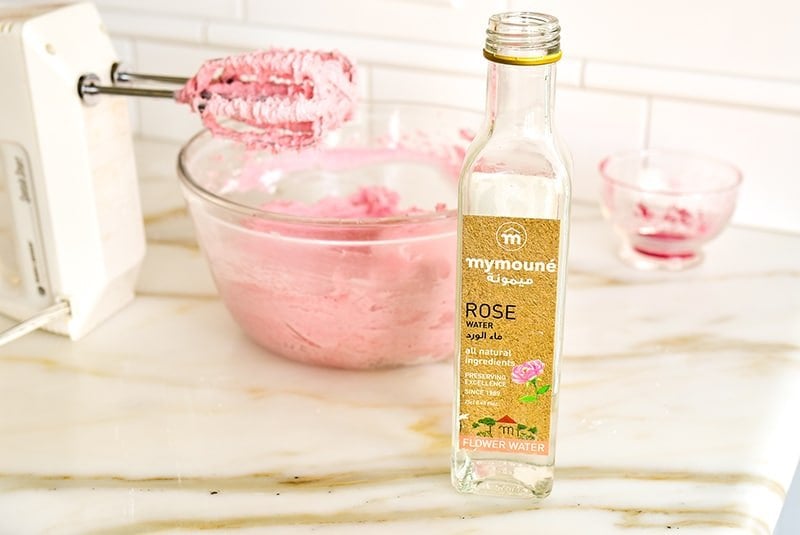
If you’ve ever seen it in a grocery store or on a recipe ingredient list, you may wonder, “What is rose water?” One of my favorite ingredients is this fragrant flower water with a rich history in Lebanese, Middle Eastern, and Mediterranean cuisines. Extracted from fresh damask rose petals through a careful distillation process, rose water has been cherished for centuries for its delicate floral notes in food and drink (as well as its many uses in skin care).
Growing up in our Lebanese American family, we actually used orange blossom water far more often! My mother always thought rose water, while a beautiful fragrance, was just “too strong” in recipes. The secret, I’ve learned, is to use it sparingly. Just a splash will make the right recipe shine without overwhelming it.

Why I Love Rose Water
Let me count the ways! Rose water is special to me because of its role in Lebanese cuisine, and because of its role in my family, too. My great-grandmother was Rose, and she passed down to my grandmother, my mother, and me as fondness for all things rose essence. From the rose chintz pattern on the china to the roses on birthday cakes, roses are always present in my family. My favorite perfume for years is a rose water based scent!
Once I discovered that a whisper of rose water brings out the natural flavors in red berries in particular, I don’t want to “berry” without it!
Happy Cooking!
– Maureen
What is Rose Water?
Rose water, also known as rose hydrosol, is a byproduct created during the steam distillation of rose petals to extract essential rose oil. While rose essential oil is highly concentrated and expensive, rose water is more subtle, affordable, and versatile. It’s what we use in cooking and baking. Rose water extract is not a comparable flavor, so avoid that.
This fragrant liquid plays an important role in Middle Eastern and Mediterranean cuisines. It’s added to both sweet and savory dishes to bring a delicate perfume and is also a beloved ingredient in beverages, desserts, and even skincare.
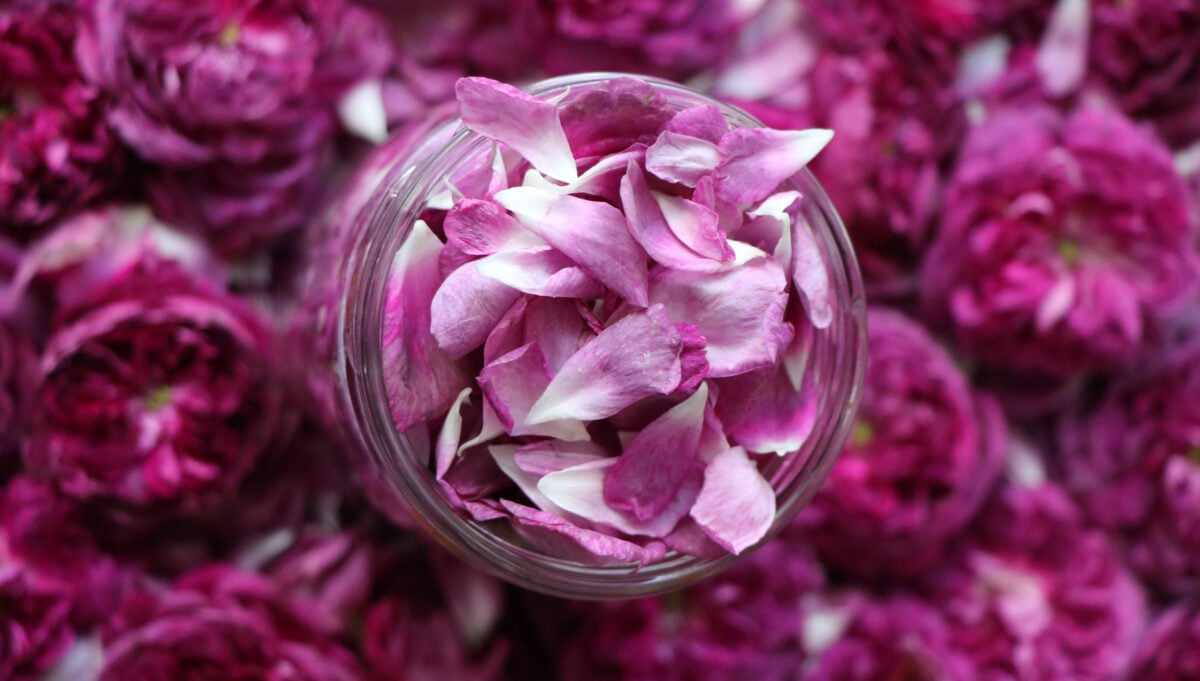
Origins & History
Rose water has been used since the Middle Ages, with its roots stretching back to Persia and the wider Middle East. From there, it spread across Europe, the Mediterranean, and South Asia, where it became a staple in both kitchens and apothecaries.
In Lebanon and surrounding countries, rose water is still a hallmark of festive cooking and special desserts. In Europe, it became popular in confections and even in French patisserie, which is integrated into Lebanese pastry because of the relationship of Lebanon as a protectorate of France in the 1900s. Beyond food, it has also held spiritual, medicinal, and cosmetic value for centuries, symbolizing beauty, purity, and celebration!
Health Benefits
In addition to its culinary uses, rose water carries a variety of health and wellness benefits:
- Rich in antioxidants that may help reduce free radical damage.
- Anti-inflammatory properties that can soothe skin redness and irritation.
- Digestive support, as it has traditionally been used in herbal medicines to calm the stomach with antibacterial properties.
- Mood-boosting effects, thanks to its naturally uplifting aroma.
It’s no wonder the benefits of rose water have been prized as both food and medicine throughout history!
Ways to Use Rose Water
Rose water is wonderfully versatile in the kitchen (and beyond). Here are some of the most common uses:
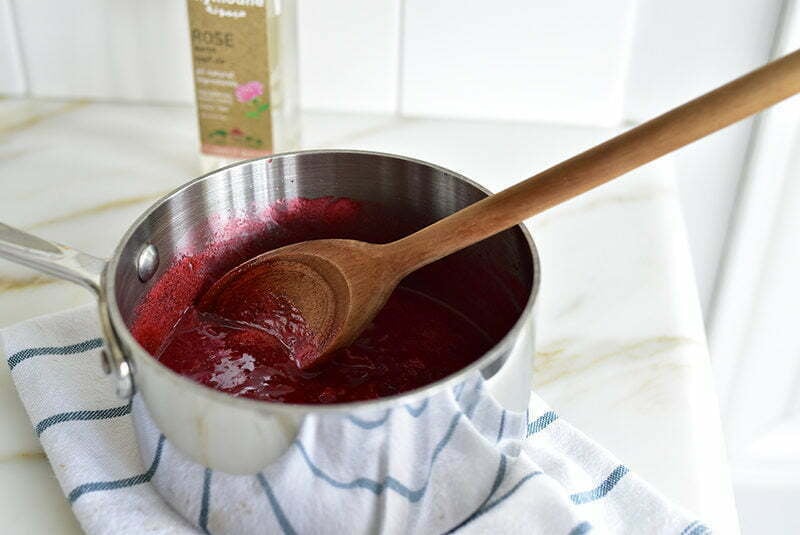
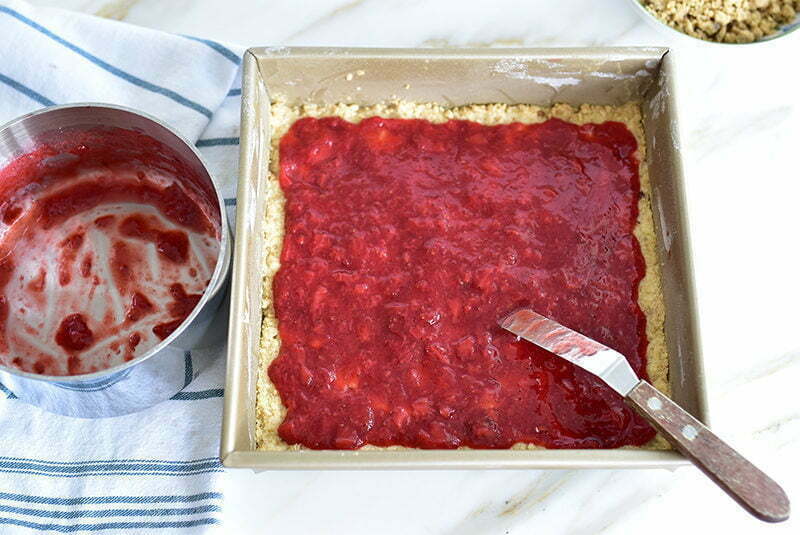
- Flavoring: This flavor can be such a perfect choice for enhancing the flavor of desserts. It adds floral notes to ice cream, rice pudding, and Turkish delight. Roses are in the same family as strawberries, and the two pair beautifully together (try it in strawberry jam and raspberry jelly). It will enhance almost any recipe with a red berry emphasis. A simple (and very small!) splash on fruit salad is aromatic and wonderful.
- Savory Dishes: It’s not just for desserts; try it to elevate savory dishes too. Add a small amount to rice dishes or stews to introduce sophisticated flavors.
- Beverages and Cocktails: Use it to flavor drinks, from refreshing and traditional Lebanese lemonade (try Strawberry Rose Lemonade) to artisanal cocktails. A few drops can transform a simple beverage like a cup of tea.
- Baking and Confectionery: Incorporating it into baked goods adds a hint of floral flavor that can elevate cookies, cakes, and pastries. Rose water is very often in flower water syrup that soaks baklawa and many other pastries in Lebanese Baking. It works beautifully and harmoniously with ingredients like vanilla extract. Try my recipes for Lemon Bundt Cake with Raspberry Rose Glaze and Raspberry Rose Marshmallows.
- Skincare: Rose water is one of the most ancient beauty products and is found in skincare routine products, essential oils, and bath salts. Rose water is prized for having anti-inflammatory properties that can reduce skin redness and skin irritation, while promoting a dewy glow!
Where to Buy It
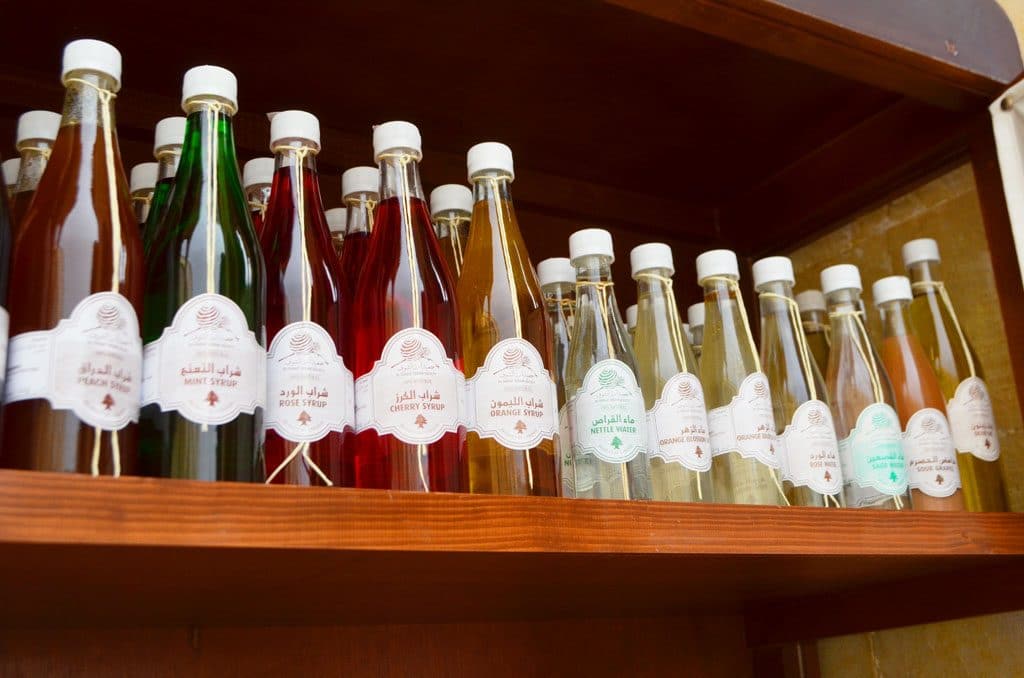
The best rose water is pure and free of additives, containing only distilled rose petals and water. You’ll find it in Middle Eastern or Mediterranean markets, and many excellent Lebanese brands are available online. My favorites come from Lebanon, and you can find Lebanese rose water in my shop!
How to Make Rose Water for Cooking
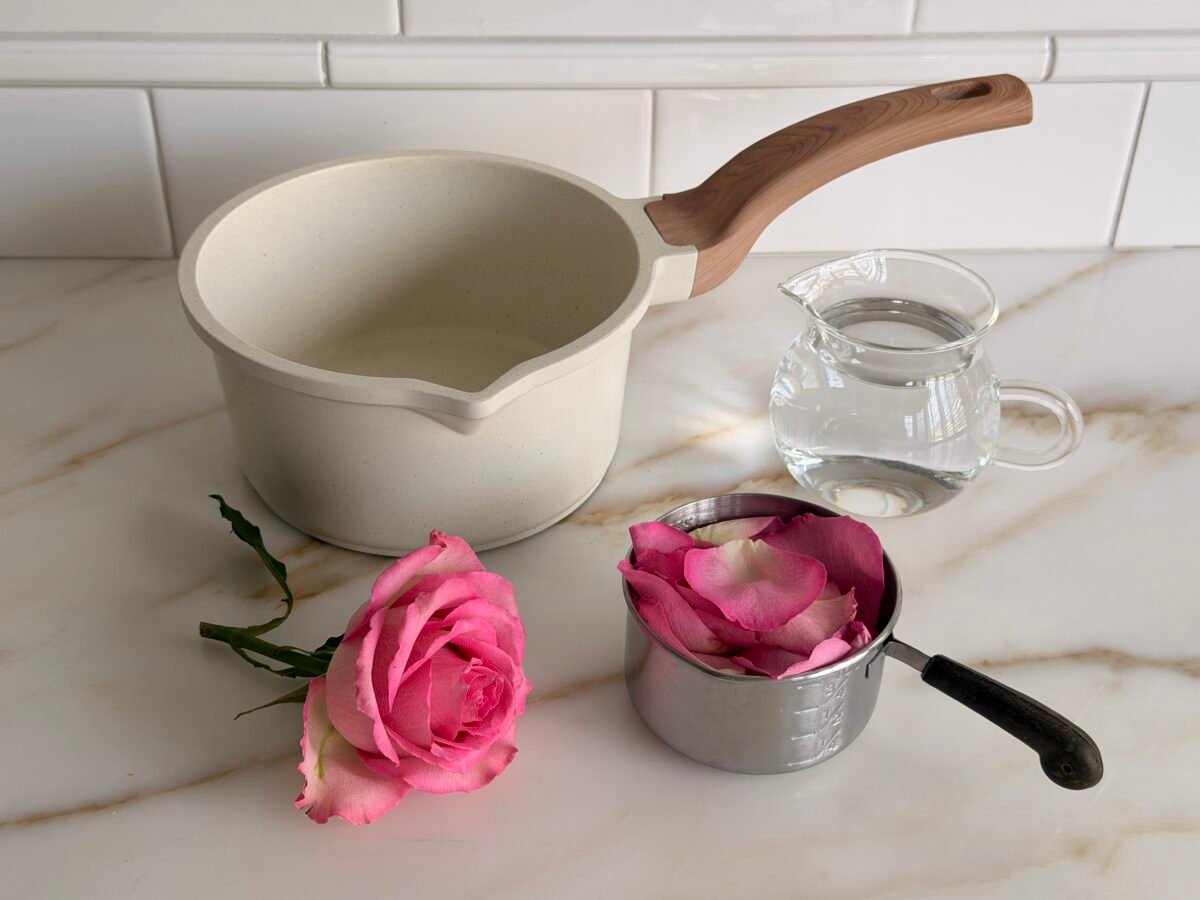
Homemade flower water is a fun project that ensures high-quality ingredients, with no additives. But it is important to note that the homemade versions do not typically have the same intensity of fragrance, flavor, and clarity as professionally distilled flower waters. To give it a try at home making your own rose water, use organic rose petals to keep your rose water edible and free of chemicals. Here’s a simple recipe to follow:
Easy Homemade Rose Water Recipe

Ingredients
- Fresh organic rose petals from rose blossoms (picking from your own roses is ideal). Petals from wild roses, for example, will work because they aren’t sprayed.
- Distilled water or hot water, just enough to cover the petals
Instructions
- Rinse the fresh rose petals thoroughly to eliminate any impurities.
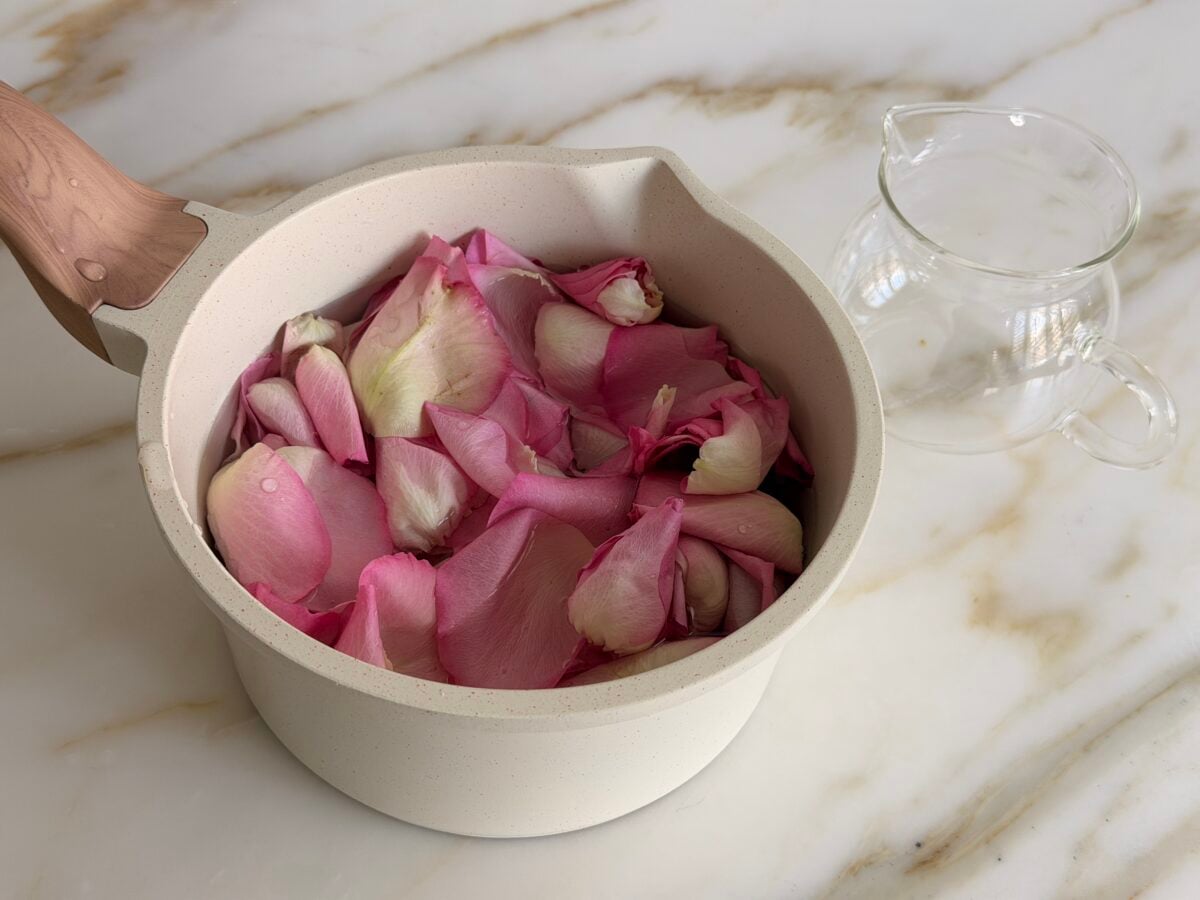
- Place the petals in a pot, adding enough distilled water or hot water to fully cover them.
- Cover the pot and gently simmer on low heat for 20-30 minutes, until the petals lose their color and transfer their essence into the water. Remove from the heat.
- Once cooled, strain the liquid using a fine mesh sieve into a clean spray bottle or jar; discard the petals.
Storage
Store rose water in a cool, dry place at room temperature in your pantry. It will last up to one year, though over time it may lose the strength of its aroma and flavor.
Tips for Adjusting the Flavor
Some tasters, like my mom, find rose water in food to be too perfume-y. You can avoid this by using a very small amount, knowing that a little goes a long way.
- Adjust for Strength: Remember that it can be potent. Start with just a few drops and adjust according to taste, whether it’s in a drink, dessert, or savory dish.
- Pairing Flavors: Rose water pairs beautifully with flavors like strawberry, vanilla, citrus, anise, and almond. Experiment by blending these components in your recipes for delightful outcomes.
- Garnishing: A light drizzle over a finished dish or dessert can serve as both a flavor and a visual enhancement.

Rose Water Recipe
Ingredients
- 2 cups fresh rose petals, from about 4 roses
- 1 cup distilled water, or filtered water
Instructions
- Rinse the rose petals thoroughly in a colander.
- In a medium pot, cover the rose petals with the water.
- Cover the pot and bring the liquid to a boil, then reduce the heat and simmer on low. Continue cooking for 20-30 minutes, until the petals lose their color and the water is infused with rose scent and flavor. Depending on the color the rose petals, the rose water may be golden, pink, or more clear.
- Remove from the heat and cool. Strain the liquid and discard the rose petals, storing the rose water in a glass bottle or jar.
Nutrition information is automatically calculated, so should only be used as an approximation.
FAQs
Is rose water the same as rose extract?
No. Rose extract is much more concentrated and potent, usually made with alcohol as a base. Rose water is more subtle, water-based, and made by distilling rose petals. If substituting, use only a drop or two of extract for every teaspoon of rose water.
Can you drink rose water?
Yes, but add it to drinks–don’t drink it full strength. Use pure rose water made from distilled petals and water, with no additives. Culinary-grade rose water is safe to drink and is often added to lemonade, tea, and desserts. Avoid using cosmetic-only versions.
Is rose water halal or kosher?
Yes. Pure rose water made only with distilled petals and water is both halal and kosher, since it contains no alcohol, animal products, or additives.














I found a recipe for Rose Cardamom Cake on your website a while ago and have lost my copy. Will you please repost? It’s a favorate and not in your cookbook (that I love!)~! Thanks SO much!
Hmm, maybe you are thinking of this? https://maureenabood.com/semolina-coconut-cake-sugared-rose-petals/
Apart from telling us how to store it and that a little goes a long way, you haven’t otherwise said much about how to use the rose water–does it matter how/when it is added to a recipe? Please advise.
William thanks so much! It’s time to update this post with more information! Rose water is typically added at the same time you would add other liquid ingredients in baked goods (similar to vanilla). For syrups, I add the flower water after cooking. More to follow!
Your recommendations for the correct storage of rose water are missing; please add and resend.
I see it got cut off! Thanks so much, I’ve updated the post.
I love both rose and orange water. Not sure which but a little was used in our family’s rice pudding. They also insisted on Carolina Rice for that and Uncle Ben’s for rice hashwee.
Ours too Sharon, my mother used orange blossom water in our rice pudding. And/or vanilla. Divine…. What is Carolina rice?!